
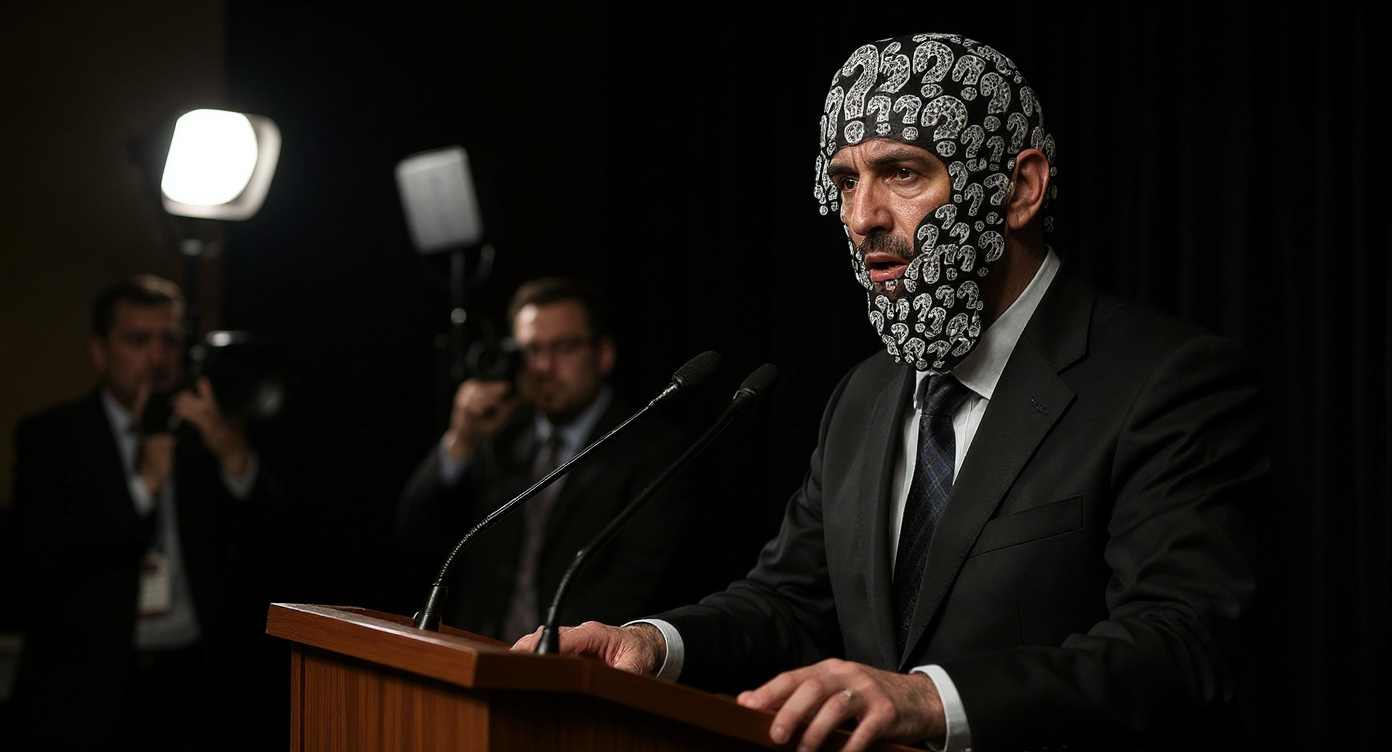
Abdul El-Sayed, the Michigan Democrat running for U.S. Senate, was asked a direct question at the debate between him and his opponent Mike Rogers: Does Israel or Iran pose a greater danger to America? He wouldn't answer. Asked to condemn Hamas, Hezbollah, and Al-Qaeda by name — the kind of request that should take about four seconds — he refused that too and snapped at the reporter. "I'm not interested in talking about this, ask about healthcare instead."
The reporter noted what we were all thinking: "That's weird, since you talk about foreign policy a lot."
Now a resurfaced video has piled on, showing El-Sayed confirming he'd vote to end America's oil and gas industry entirely. This in Michigan, a state whose economy runs on manufacturing, energy, and people who drive trucks to work. Key Democrat groups in the state are now publicly opposing his candidacy weeks before the election — which tells you the internal polling must be catastrophic.
The energy position alone would be enough to sink most candidates. But El-Sayed's problem is compounding. On August 5, 2026, the Senate Judiciary subcommittee chaired by Senator Ted Cruz heard testimony from Kyle Shideler, the Director and Senior Analyst for Homeland Security and Counterterrorism at the Center for Security Policy. Shideler laid out what he called the "connections" surrounding El-Sayed's inner circle.
Specifically, Shideler testified about El-Sayed's father-in-law, Jukaku Tayeb, the former president of CAIR-Michigan. "I look at the connections that his father-in-law has to Brotherhood-linked groups," Shideler told the committee. He went further, identifying the organization Emgage — which has backed El-Sayed — as having been "created by a former CAIR member" who served as a "consultant to convicted terrorist Sami al-Arian."
That's a direct line from El-Sayed's endorsement network to a man convicted on terrorism charges, drawn under oath in front of a Senate committee. Not by a campaign opposition researcher. By a counterterrorism analyst.
El-Sayed also owns property in the United Arab Emirates, a detail that drew a sharp contrast with his opponent. Republican Mike Rogers has been criticized for maintaining a home in Florida. Rogers's response was succinct: "At least Florida is in the United States."
El-Sayed's strategy for handling all of this has been to treat every question about his associations as Islamophobia. He's criticized Rogers for even asking him to condemn designated terrorist organizations, framing the request itself as bigotry. The problem with that defense is that nobody asked him to condemn Islam. They asked him to condemn Hamas and Hezbollah. Those are organizations the U.S. government has formally designated as terrorist groups. Refusing to condemn them isn't a religious stance. It's a policy position — and voters in Michigan are entitled to know what it means.
The organizations CAIR, the Islamic Society of North America, and Emgage form a web that counterterrorism analysts have spent years documenting. El-Sayed's father-in-law sat at the center of the Michigan chapter. The candidate himself won't condemn the terrorist groups those analysts flag. And the video showing he'd gut Michigan's energy sector just made the political math impossible for Democrats trying to hold the seat.
His own party's coalition groups are walking away in October. That doesn't happen because of bad messaging. That happens because the background check came back, and nobody wanted to be standing next to what it found.