
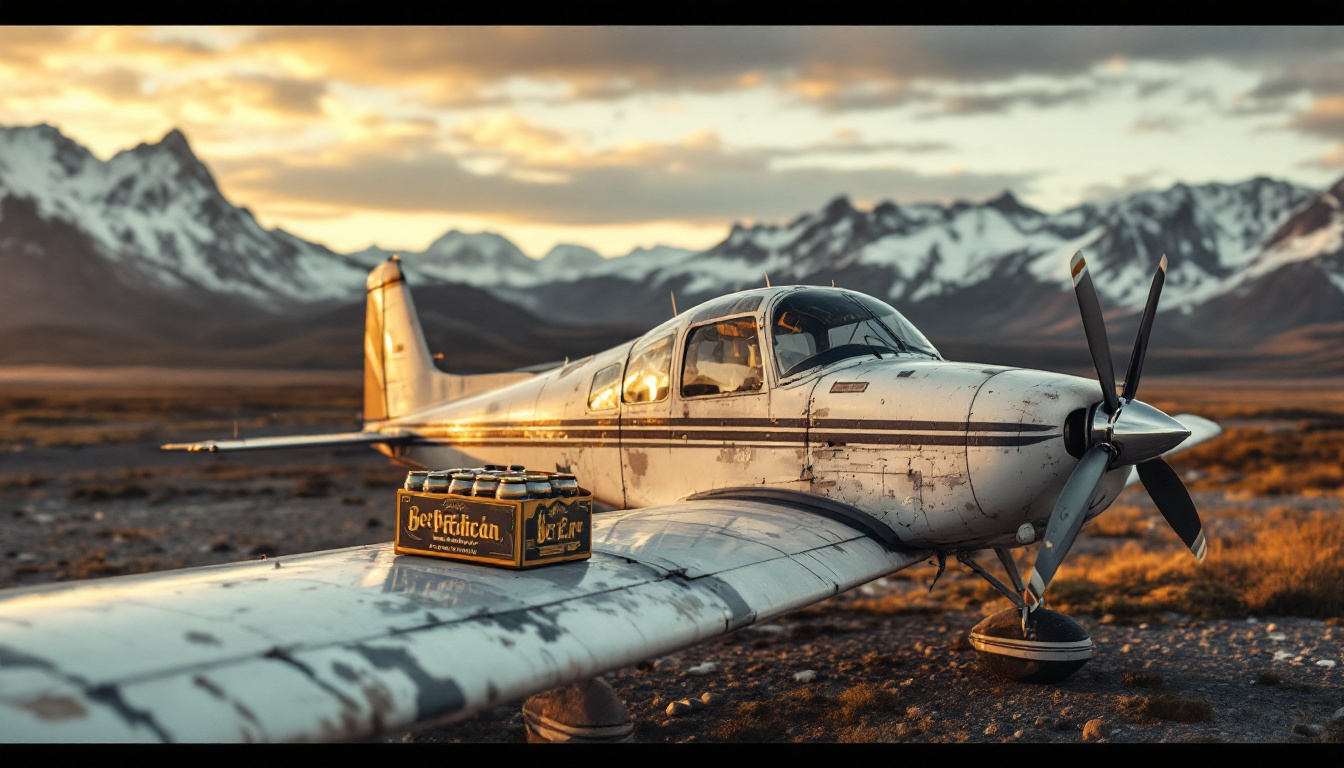
In 2012, Kenneth Jouppi was sitting on a runway in Fairbanks, Alaska, preparing to fly a customer and her groceries to the remote village of Beaver — population under 100, no roads in or out — when state troopers executed a search warrant on his 1969 Cessna airplane. During the raid officials found a shopping bag containing a six-pack of Budweiser. The passenger was bringing it home for her husband's birthday.
Fourteen years later, the State of Alaska is still trying to convince the courts they deserve to keep his $95,000 airplane.
The U.S. Supreme Court agreed on July 20 to hear Jouppi's appeal, taking up the question of whether seizing an elderly man's livelihood over a misdemeanor beer run violates the Eighth Amendment's ban on excessive fines. Jouppi, now 82, operated a one-man air taxi service out of that Cessna. It wasn't a side hustle. It was how he made a living in one of the most unforgiving landscapes in America.
Beaver had banned the sale, import, and possession of alcohol within village limits, making Jouppi's flight technically illegal. He was convicted of misdemeanor alcohol importation. The criminal court handed down 180 days in jail — 177 of them suspended — a $3,000 fine with $1,500 suspended, and three years of probation. By any measure, the system processed the offense and assigned a heavy penalty already for the crime.
But the state of Alaska wasn't done punishing Jouppi. They wanted his plane too for his illegal six-pack of beer.
The case, Jouppi v. Alaska, has bounced through the state court system like a bureaucratic pinball machine. The trial court initially ruled forfeiture was impermissible because the alcohol never actually reached Beaver. The Alaska Court of Appeals reversed, saying destination didn't matter. The trial court then ruled the forfeiture unconstitutionally excessive. The Court of Appeals reversed again. The Alaska Supreme Court unanimously upheld the seizure, writing that the harm from "even a six-pack of beer knowingly imported into a dry village is severe enough to warrant forfeiture of an aircraft." The state's highest court called the seizure "not grossly disproportional to the gravity of the offense."
And here's where the case stops being about one old pilot in Alaska and starts being about every American who owns anything the government decides it wants. Civil asset forfeiture — the legal mechanism that lets the state seize property connected to a crime — has become a revenue engine for law enforcement agencies across the country. The Supreme Court addressed part of this in 2019 with Timbs v. Indiana, where the state seized Tyson Timbs' $42,000 Land Rover after he sold $385 worth of heroin. The Court ruled unanimously that the Eighth Amendment's excessive fines protection applies to the states. But it didn't spell out exactly how courts should measure "excessive." Jouppi's case forces that question.
The Supreme Court will hear oral arguments during its October 2026 term, with a decision expected by June or July 2027. The 6-3 conservative majority has the opportunity to set a clear proportionality standard that would limit forfeiture abuse nationwide.
Alaska spent fourteen years and untold taxpayer dollars trying to keep an old man's airplane over a bag of birthday beer. The Eighth Amendment has one job here, and it's not complicated.
Sixty-three times the fine. For a six-pack that never left the runway.