
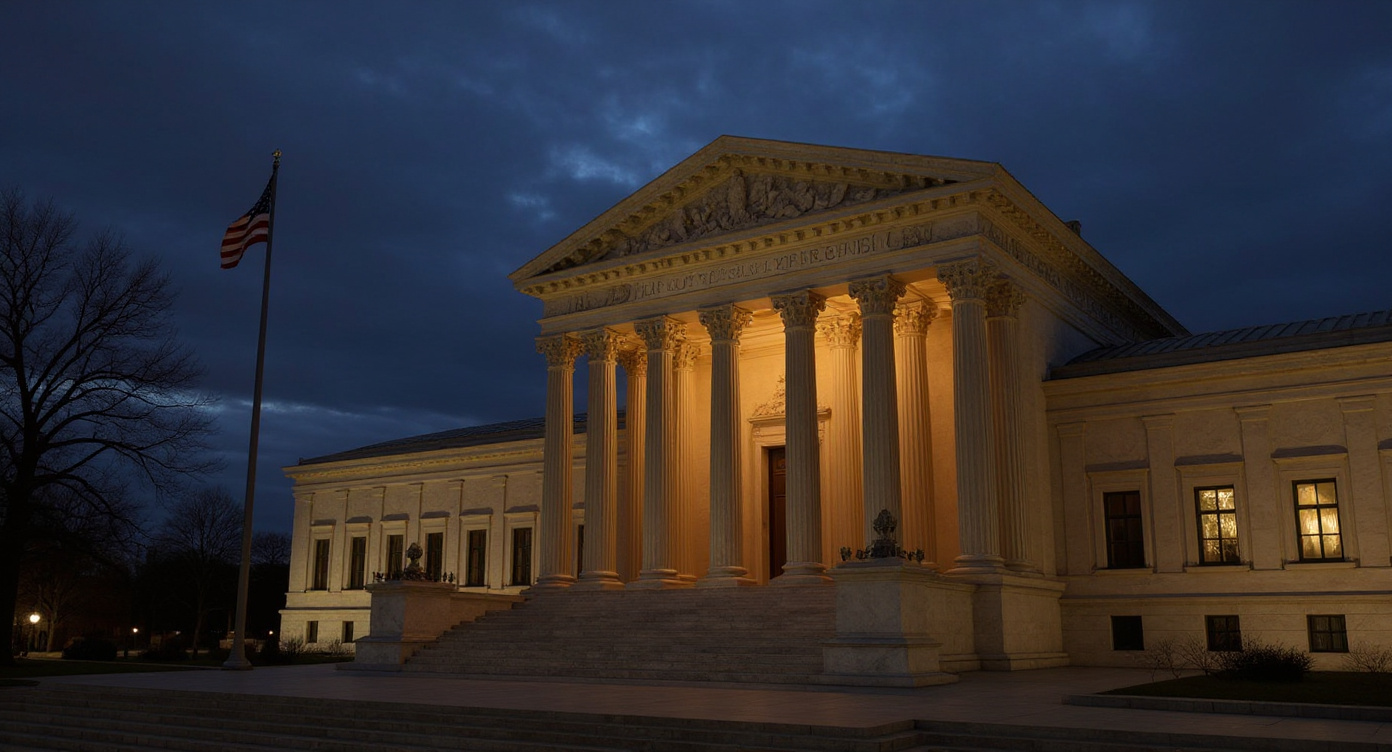
Justice Samuel Alito had prepared a bench statement in the asylum case Mullin v. Al Otro Lado. He delivered it. Case closed, on to the next one — that's how the Supreme Court usually works. Then Justice Sonia Sotomayor did something unusual: she read a public dissent from the bench, a move reserved for cases where a justice feels the majority has gone catastrophically wrong.
So Alito did something even more unusual. He came back.
"There is much that I would have added to my bench statement had I known there would be a dissent read," Alito said, in what legal observers called a highly unusual impromptu rebuke. Supreme Court justices don't typically respond to dissents in real time. The fact that Alito felt compelled to break that norm tells you everything about what Sotomayor was doing from the bench.
What she was doing was invoking the Holocaust. Sotomayor compared the case to the MS St. Louis, the ship carrying Jewish refugees fleeing Nazi Germany in 1939 that was turned away from American shores. "If the refugees on the MS St. Louis were to walk up to a port of entry on our southern border today, the majority's interpretation would allow immigration officers to refuse even to consider their asylum applications by physically blocking them from stepping foot onto U.S. soil," she said.
She also predicted mass casualties: "The consequences of today's decision are predictable. More people will die."
Alito, as reported by American Wire News, wasn't having it. He explained that the government's actual policy "merely delayed entry by some aliens as a way of improving a situation that both interfered with the proper conduct of inspection and created unsanitary, inhumane, and sometimes dangerous conditions at ports of entry." In other words, the policy Sotomayor was comparing to turning away Holocaust victims was a queue management system designed to prevent overcrowding.
CNN's chief Supreme Court analyst Joan Biskupic, appearing on Wolf Blitzer's program, acknowledged the exchange was remarkable. MSNBC legal analyst Lisa Rubin also noted the departure from Court norms. When both CNN and MSNBC flag a conservative justice's behavior as extraordinary, it's worth understanding why he did it: because the dissent was that misleading.
Sotomayor's rhetorical strategy in Mullin v. Al Otro Lado follows a pattern we've seen before. Take a routine policy dispute — in this case, how immigration officers manage physical entry at overwhelmed ports — and recast it as a moral atrocity by reaching for the most emotionally loaded historical comparison available. The goal isn't legal precision. The goal is the headline. And CNN, right on schedule, gave her one.
The actual legal question in the case was whether immigration officers could manage the flow of asylum seekers at ports of entry to maintain orderly processing. Not whether asylum could be denied entirely. Not whether people would be deported without hearings. Whether the line could be managed. Sotomayor turned a procedural ruling into a genocide analogy.
Alito's rebuke didn't come with theatrics. He didn't invoke historical tragedies or predict body counts. He pointed to what the policy actually did, corrected the record on what the majority actually held, and sat down. The contrast between the two approaches — one designed to generate cable news segments, the other designed to state facts — is the whole story of the modern Court in one exchange.
The SCOTUS term is wrapping up, and the dissents are getting louder. That usually happens when the minority knows it's losing on the law and decides to try winning in the press instead.
Alito responded the only way that works: with the case file, not the camera.