
A Texas appeals court just erased $43 million from Alex Jones' Sandy Hook defamation judgment. The original verdict was roughly $50 million. The new number is approximately $7 million. That's an 86% reduction — not because the court liked Alex Jones, but because the trial judge didn't follow the law.
The legal establishment spent years building the case that would destroy Jones financially. An appeals court just said the trial that produced it was broken.
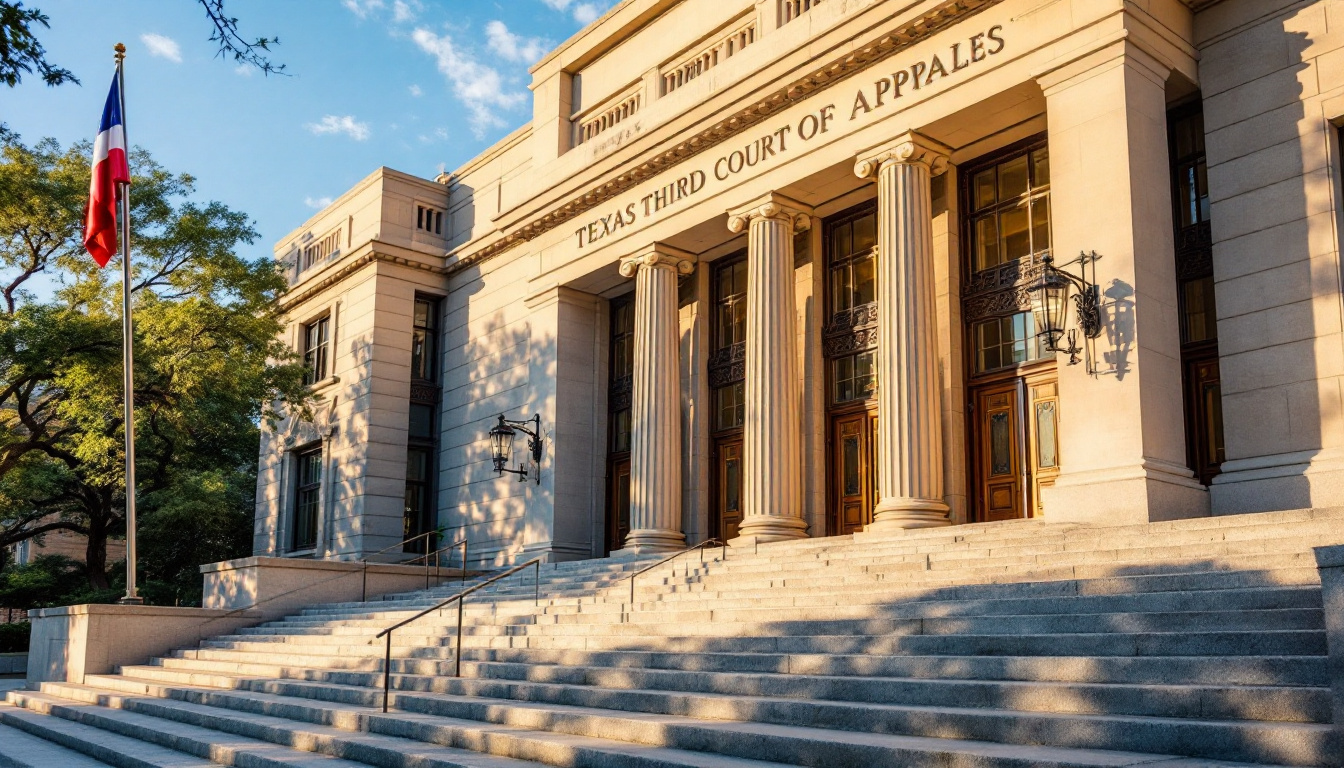
Chief Justice Darlene Byrne, writing for the Texas Third Court of Appeals in Austin, found that the trial court judge improperly allowed plaintiffs Neil Heslin and Scarlett Lewis — the parents of Sandy Hook victim Jesse Lewis — to amend their damages petition more than a month after the jury had already ruled. The amendment exceeded the $750,000 statutory cap, and it came after the jury had already spoken.
The original 2022 jury verdict combined compensatory and punitive damages into a roughly $50 million award. It was presented to the public as a landmark moment of accountability — proof that conspiracy theories carry a price. Cable news covered it like V-E Day. Legal commentators used words like "historic" and "watershed."
What they didn't mention was that the process used to reach that number had a procedural defect significant enough for an appellate court to gut it by $43 million.
Jones, for his part, made clear he isn't done fighting. "We will now appeal that to the Supreme Court," he said after the ruling. "Then there's going to be a major judicial investigations." Jones still faces a separate $1 billion judgment owed to families of other Sandy Hook victims. No families have collected any damages despite years of court proceedings.
Left-wing legal commentators are already framing this as a miscarriage of justice — a system protecting a conspiracy theorist on a technicality. Which is an interesting way to describe an appellate court enforcing the statutory damages cap that exists specifically to prevent runaway verdicts. The $750,000 cap isn't obscure. It isn't new. It's the law the trial judge chose to ignore.
The broader pattern here matters more than Jones himself. When courts produce verdicts against unpopular defendants, the procedural shortcuts used to get there tend to go unexamined. Nobody in media had any incentive to scrutinize whether the trial was conducted properly — the result was too satisfying. Jones is easy to root against. That made the process invisible.
But appellate courts don't grade on sympathy. Chief Justice Byrne's opinion didn't weigh whether Jones deserved what he got. It asked whether the trial court followed the rules to get there. The answer was no. The judge allowed a post-verdict amendment that inflated the damages past what the law permits. That's not accountability. That's improvisation.
The $7 million that remains is still a significant judgment. Jones still owes a billion dollars in separate proceedings. Nobody is walking away clean.
But $43 million just disappeared from a verdict the entire media class treated as settled law — because the judge who produced it couldn't be bothered to follow the statute on the books.