
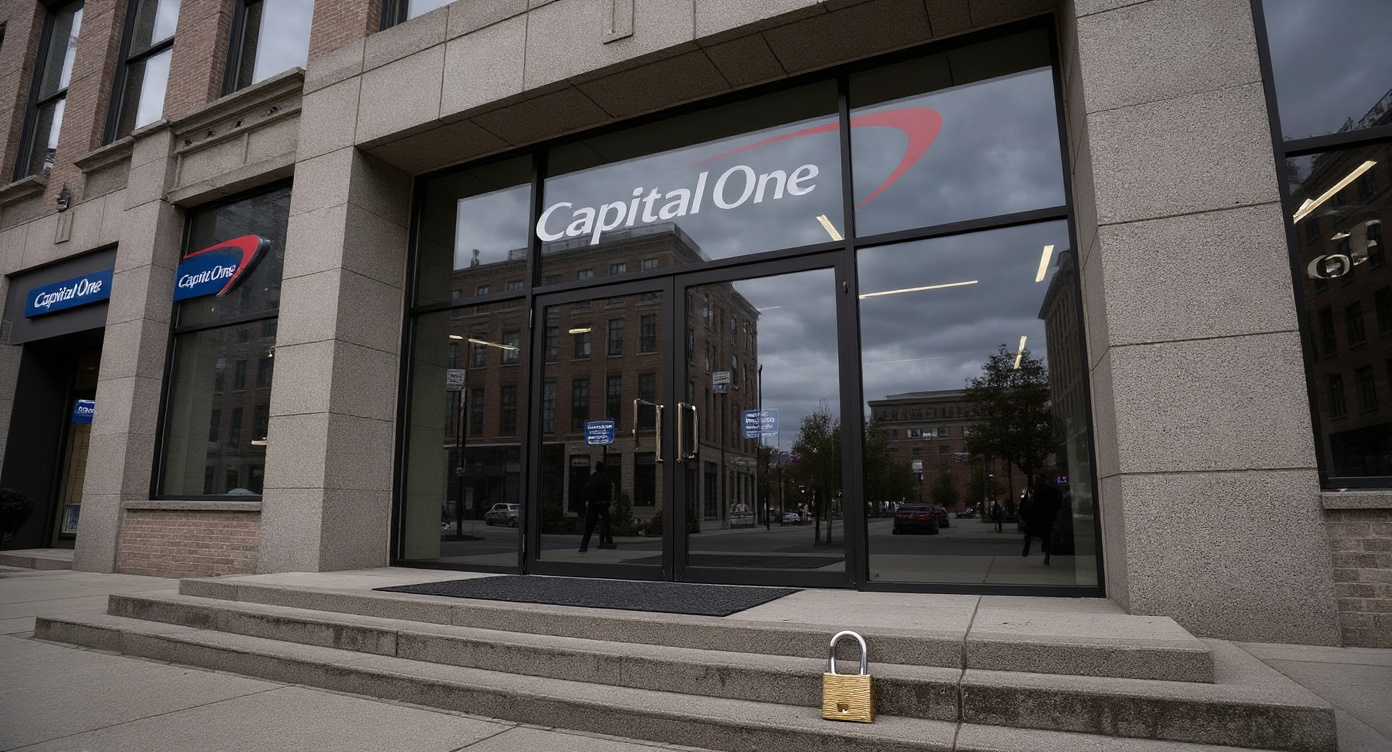
Three hundred and eighty-five accounts. That's how many Capital One shut down on March 21, 2021 — accounts belonging to the Donald J. Trump Revocable Trust and affiliated businesses including a winery, a bottled-water company, and a golf course developer. Some of those accounts had been open for more than a decade.
Now Capital One says it can't explain why, because federal law won't let it.
The bank filed a motion to dismiss in The Donald J. Trump Revocable Trust v. Capital One NA, arguing that anti-money laundering regulations — the same rules designed to catch drug cartels and terror financiers — prevented it from giving the Trump Organization a straight answer about the closures. Capital One's lawyers stated they wanted to "make clear that Capital One closed Plaintiffs' accounts for anti-money laundering ('AML') reasons."
Which is a fascinating thing to volunteer while simultaneously claiming you're legally barred from discussing the details.
The timeline matters. January 6, 2021. Then, just over two months later, 385 accounts shuttered. The Trump Organization had banked with Capital One for over ten years without incident. No public complaints. No regulatory actions. Then one Wednesday in March, it was over. Capital One insists it "never publicized the termination decision nor its confidential internal process" — as though keeping quiet about dumping a former president's business accounts was some kind of noble restraint.
The lawsuit, originally filed on March 7, 2025, alleges the closures were politically motivated. Capital One counters that the Trumps are relying on "cherry-picked quotations unsupported by the full context." The bank also points to account agreements allowing it to terminate relationships "at any time, for any or no reason and without notice."
That's technically true. Banks can close your account whenever they feel like it. They put it in the fine print and you agree to it when you sign up. But "we can" and "we should" are different questions, and "we had to because of anti-money laundering laws" is a third answer entirely — one that conveniently shields Capital One from ever having to prove its reasoning in open court.
Here's what the AML defense actually does: it shifts the conversation from "did you dump Trump for political reasons" to "we'd love to explain, but the government won't let us." Banking secrecy laws were written to prevent tipping off actual criminals that they're under investigation. Capital One is now using those same protections as a litigation shield against a client who was never charged with anything.
The broader pattern isn't subtle. After the 2020 election and January 6, multiple financial institutions began distancing themselves from Trump-affiliated entities. Some did it publicly. Capital One did it quietly — 385 accounts, no explanation, and a decade-long banking relationship ended with what amounts to a form letter.
Now they're in federal court arguing that the very secrecy of the process proves it was legitimate.
A bank that serves you faithfully for ten years doesn't suddenly discover money-laundering concerns two months after a political earthquake. Either Capital One had evidence of actual wrongdoing — in which case, where are the criminal referrals? — or it found a convenient regulatory excuse to make a political problem disappear.