
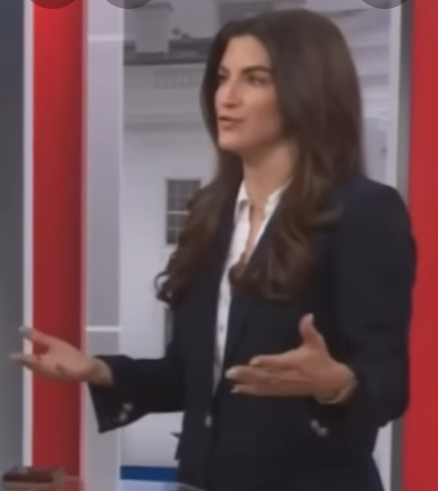
Kaitlan Collins had a Supreme Court citation ready. She'd used it on Sunday with Dana Bash's segment. She brought it again to her interview with UN Ambassador Mike Waltz outside the United Nations building on the eve of President Trump's major UNGA address.
Waltz had read the actual case law.
The exchange, reported by LifeZette's David Schultz, centered on the Trump administration's restrictions on CNN's White House access. Collins attempted to frame the issue as a constitutional violation — reporters, she argued, cannot be excluded based on "their viewpoint or reporting." It's a clean talking point. It also isn't what the relevant Supreme Court decisions say.
Waltz didn't let it slide. "You just ignored what I said," he told Collins on air. "You don't have an inherent right to any government facility you want, whether it's Langley or the White House."
Collins pushed back, referencing a case she claimed established that while reporters don't have "carte blanche," the government "can't just ban outlets based on their viewpoint or reporting." She remembered Waltz making a similar argument to Dana Bash on Sunday. She was ready for the rematch.
The rematch did not go as planned. Waltz cited the full scope of the precedent Collins was cherry-picking: "And that has been determined by multiple Supreme Court cases in the 60, 70, and as recently as a few years ago." The cases don't establish a right to White House access. They establish the opposite — that access to government facilities is not a constitutional entitlement.
Then Waltz made the point Collins couldn't answer. "He's not saying, 'Don't go out and report.' Heck, we're talking right now!" He paused. "I'm standing here talking to CNN right now, and you just referenced when I was on CNN on Sunday morning. That is very different than when you have access to every government institution."
The distinction is simple enough that it shouldn't need explaining to a network anchor: the First Amendment protects your right to publish. It does not guarantee you a seat in the briefing room. CNN can report whatever it wants. The White House is not obligated to hand them a front-row chair while they do it.
Collins had no response to the access-versus-reporting distinction, so the segment moved to national security leaks. Waltz didn't soften. "I think when we have outlets relying on anonymous sources, talking about the levels of munition in the middle of conflict, vulnerabilities, deployment orders…that are highly classified, that's absolutely a national security threat and should be investigated and prosecuted."
The clip is circulating because it captures something that happens more often than CNN would like to admit: an administration official who actually knows the legal framework being asked about it by an anchor who memorized one half of one ruling. Collins came prepared for a debate. Waltz came prepared for a deposition.
The interview took place the night before Trump's address to the United Nations General Assembly — a setting where the administration's media strategy is on full display for an international audience. Collins chose that moment to relitigate White House press access. Waltz chose that moment to explain, on CNN's own air, why the legal argument for guaranteed access doesn't exist.
Collins cited the case. Waltz read it.