
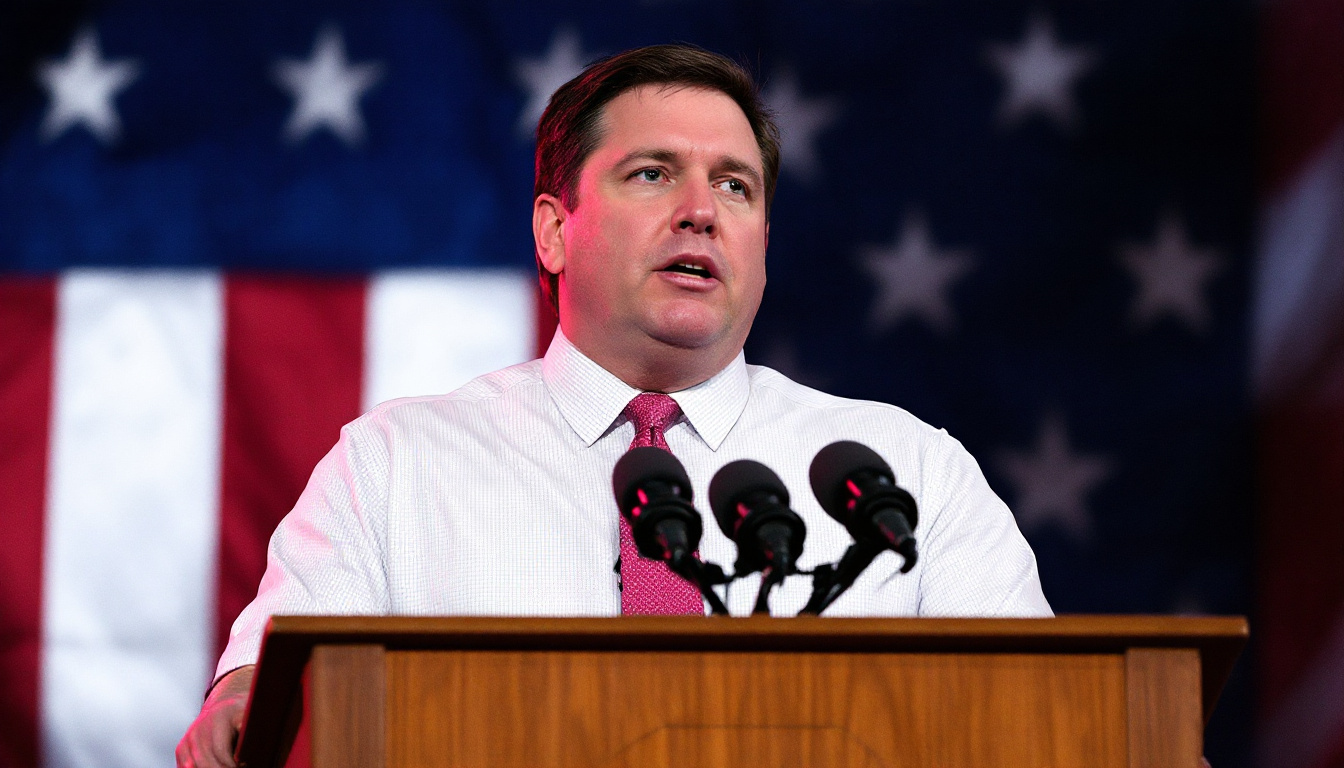
Nine Republican senators face reelection in 2028. Florida Governor Ron DeSantis just went on the Sage Steele Show and said out loud what most of the party's leadership is still pretending isn't true: if the GOP runs 2026 again, it's going to lose even more of them.
"I've never seen in a year that was worse for Republicans across the board in a midterm since I've been on God's green earth," DeSantis told Steele.
The specifics are ugly. Senators like Ted Budd in North Carolina, James Lankford in Oklahoma, Tim Scott in South Carolina, Chuck Grassley in Iowa, and Rand Paul in Kentucky all have to defend their seats in a cycle that just proved Republican voters will pull the lever for Democrats when the messaging is wrong. Lisa Murkowski in Alaska is already a coin flip on a good day. DeSantis, who watched his own state stay red while the rest of the map collapsed, isn't guessing about what went wrong. He's diagnosing it.
The diagnosis is simple: the anti-socialism playbook is dead. DeSantis put it bluntly — "just screaming socialism going to work? Obviously, it didn't work in this election." Candidates ran on vague warnings about the left instead of making an affirmative case for what Republican governance actually delivers. Voters who pulled the lever for Trump and Vice President JD Vance in 2024 turned around and voted for Democrats in 2026. Vance himself acknowledged it: "Our voters did show up. The main problem is that many people who voted for Trump/Vance in 2024 voted for Democrats in 2026."
That's not a turnout problem. That's a product problem.
DeSantis has standing to make this argument because Florida didn't follow the national trend. Byron Donalds won the governor's race. The state held. The difference wasn't luck — it was that Florida Republicans ran on a record of actual governance: insurance reform, education choice, economic growth you could measure. The rest of the party ran on vibes and assumed Trump's coattails would carry them through a midterm where Trump wasn't on the ballot.
The counterargument from Washington is that midterm losses are cyclical, that the president's party always takes a hit. Historical averages and all that. Except historical averages don't account for a map where nine of your incumbents are exposed and the electorate just told you it's willing to cross over. Cyclical loss is what happens when you do nothing wrong. This was a cycle where candidates did specific things wrong — ran bad ads, avoided debates, leaned on slogans that stopped working two years ago — and got exactly the result those choices produce.
What DeSantis is really saying is that the governor's mansion model works and the Senate campaign model doesn't. Governors have to deliver. They sign budgets, manage crises, make visible decisions with visible consequences. Senators give speeches and vote on things most people never hear about. The governors who win — DeSantis, Glenn Youngkin before him — win because they can point to something concrete. The senators who lose do so because "stopping socialism" isn't a concrete thing.
Breitbart reported DeSantis's comments as the post-midterm analysis window opened, and the timing matters. This is the seventy-two hours when the party decides whether to learn the lesson or explain it away. DeSantis is betting on learning. The Washington consultants who cashed checks on losing campaigns are betting on explaining.
Nine seats. Two years to fix the messaging, recruit candidates who've actually run something, and build a case voters will buy when they're not choosing between Trump and a Democrat.
DeSantis already made his case. The question is whether anyone in Washington was listening or just waiting for their turn to talk.