
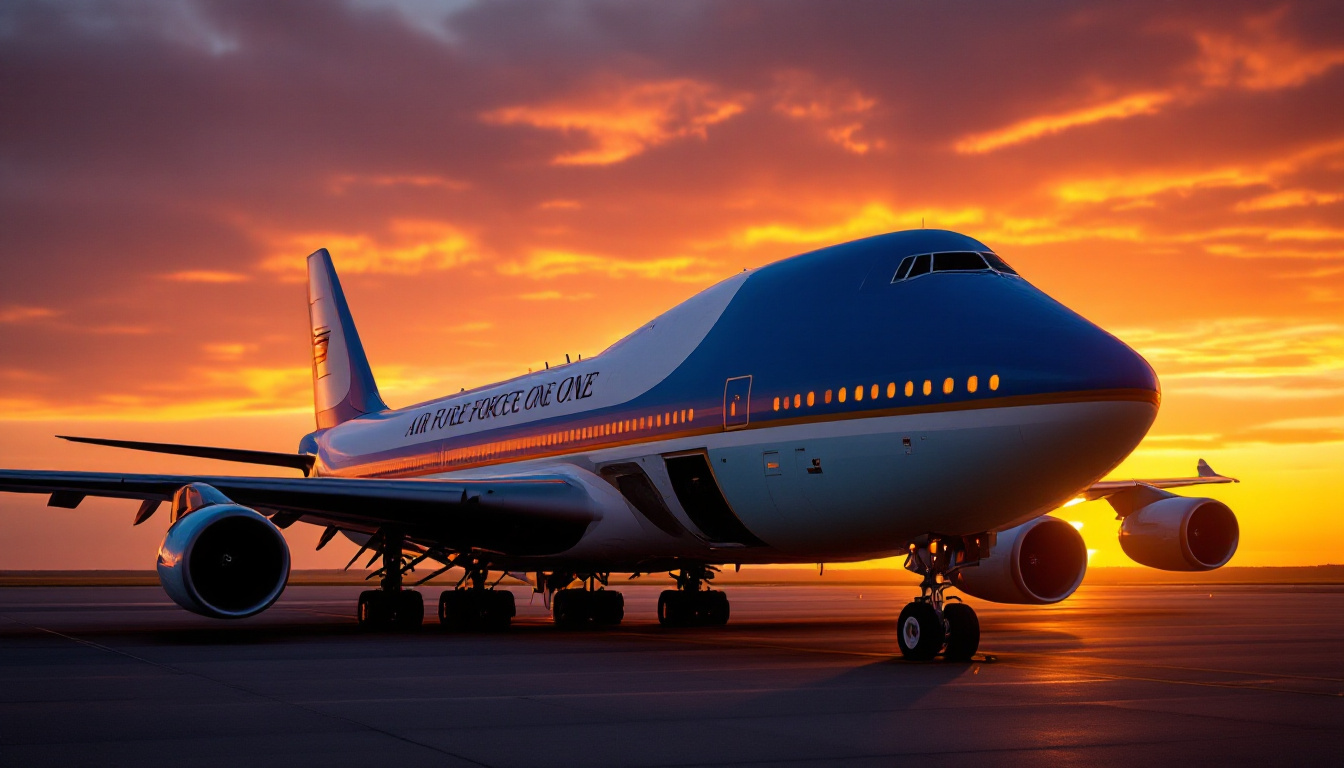
Four New York Times reporters found FBI agents on their doorsteps last week — not for a friendly interview, but with federal subpoenas demanding they explain how they obtained classified security details about the new Air Force One. Julian E. Barnes, Eric Lipton, Tyler Pager, and Eric Schmitt had published a story on July 8 detailing the security protocols of the $400 million Boeing 747-8 retrofit that will carry the President of the United States.
The Department of Justice didn't mince words about why. "We are not going to ignore the law and stop investigating the people who work in the administration and think it's okay to leak classified information impacting national security," the DOJ said in a statement. White House spokesman Steven Cheung confirmed the story had exposed details of "a state-of-the-art aircraft that has been fitted with high-level security protocols," adding that the administration would use "every tool at our disposal, including distraction and misdirection" to protect the President's security.
So let's get the picture straight. The New York Times published specific security details about the aircraft that carries the President — the defensive systems, the protocols, the capabilities of a plane designed to function as a mobile command center during a nuclear war. And they did it because someone inside the government handed them classified information, and four reporters decided the public's "right to know" extended to helping foreign adversaries understand exactly how to target Air Force One.
The Times, predictably, is treating this as a press freedom crisis. NYT attorney David McCraw called it unconscionable. "The appearance of federal law enforcement agents on the doorstep of news reporters should shock the conscience of any American," McCraw said. Seth Stern, advocacy chief at the Freedom of the Press Foundation, piled on, claiming that "when the government claims it needs to investigate journalists to protect national security, it really means its own reputational security."
Reputational security. We're talking about the physical security of the President's plane — the one that has to survive a missile attack — and the Freedom of the Press Foundation thinks this is about hurt feelings.
Here's what makes the press freedom argument collapse under its own weight. Nobody subpoenaed these reporters for writing mean things about the administration. Nobody came after them for an opinion column or an editorial. The DOJ issued subpoenas because classified national security information about a specific aircraft's specific defensive capabilities was published in the nation's most-read newspaper, as reported by Patriot News Alerts. The FBI and the Secret Service are involved because the leak endangered the President's life, not his poll numbers.
The same newspaper that runs front-page stories about "threats to democracy" published a blueprint for threatening the man who sits in the Oval Office. The same editorial board that lectures us about "norms" decided the norm against revealing how to defeat Air Force One's defenses wasn't worth keeping.
Four reporters. Four subpoenas. A $400 million aircraft whose security details are now in the open.
The Times keeps calling it journalism. The DOJ is calling it what the law calls it.