
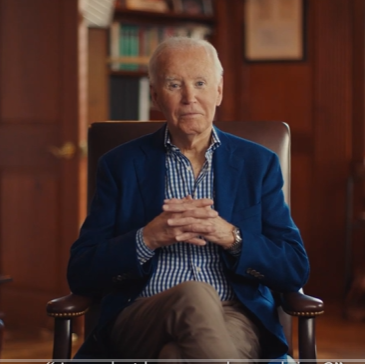
In 2016 and 2017, Joe Biden sat down with memoir ghostwriter Mark Zwonitzer and talked. About what, exactly, we're about to find out — because a federal appeals court just ruled 2-1 that the public has a right to hear every word.
Biden sued to stop it. He lost.
The U.S. Court of Appeals for the D.C. Circuit ruled Monday that "any remaining incursion on personal privacy from disclosure of the now-redacted materials likely does not outweigh the public interest in disclosure." The recordings and transcripts were gathered during Special Counsel Robert Hur's investigation into Biden's handling of classified documents from his years as a senator and vice president — the same investigation where Hur famously declined to file charges.
Republicans in Congress demanded the materials after Hur's report landed. The Heritage Foundation filed its own request. Biden's legal team fought both, characterizing the conversations with Zwonitzer as "candid, personal, and intended to remain private."
Private is one word for it. Another word might be "incriminating enough to spend a year in court trying to bury."
The three-judge panel split along interesting lines. Chief Judge Sri Srinivasan, an Obama nominee, sided with the majority. Judge Gregory Katsas, a Trump nominee, joined him. The lone dissent came from Judge Florence Pan — nominated to the bench by Biden himself. The court found a "substantial" public interest in releasing the material, a conclusion that District Judge Dabney Friedrich had already reached back in June when she ruled against Biden at the lower court level.
Biden's team has until August 3 to pursue another appeal. Which means the former president now has roughly two weeks to decide whether dragging this out further draws more attention to whatever's on those tapes than simply letting them drop.
That's the calculation nobody on his legal team wants to make out loud. Every appeal extends the news cycle. Every filing reminds the public that a special counsel investigated a sitting president for mishandling classified material, found enough to write a damning report, and then watched that president spend the next two years trying to make sure nobody heard the source recordings.
The Biden team's argument boils down to privacy — that a former vice president chatting with his ghostwriter deserves the same protection as a therapy session. Courts at two levels now have looked at that argument and reached the same conclusion: not when the conversations involve the handling of classified national security material. The "personal and candid" framing sounds reasonable until you remember these recordings were subpoenaed by a special counsel, not recovered from a memoir publisher's slush pile.
Hur's decision not to charge Biden was itself controversial. His report described Biden as a "sympathetic, well-meaning, elderly man with a poor memory" — a characterization that did more political damage than an indictment might have. The recordings could show whether that portrayal was accurate or generous. Either answer creates problems for a legacy already running on fumes.
Two courts. Three judges across two panels. An Obama appointee siding against Biden. The only vote in Biden's favor came from a judge he personally put on the bench.
When your own coalition's judges won't cover for you, the tapes must be something.