
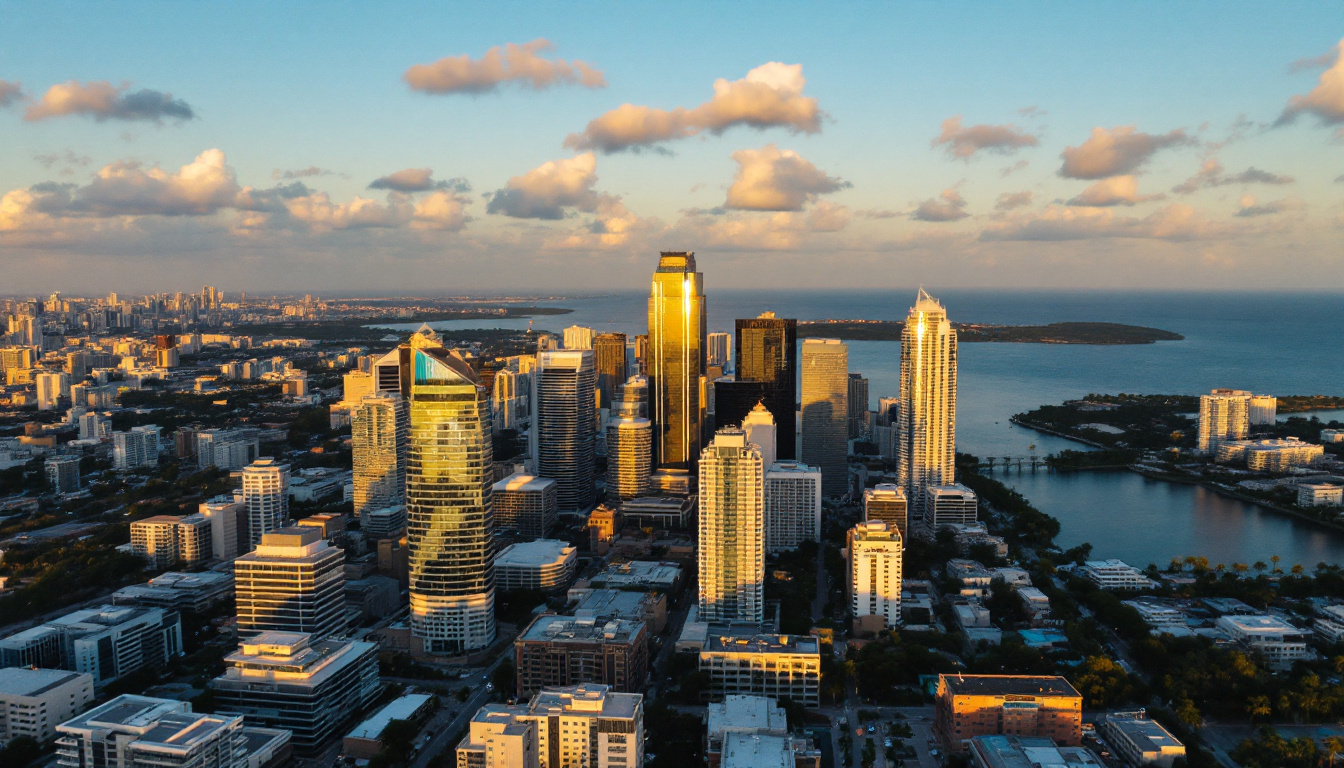
Larry Page spent $101.5 million on Miami property in December, then came back in January for another $71.9 million worth. His Google co-founder Sergey Brin picked up a $51 million waterfront home in Miami Beach and a $42 million mansion on the Nevada side of Lake Tahoe. That's roughly $266 million in real estate purchases, and not a single dollar of it landed in California.
Meanwhile, Google just expanded its Miami office from 10,000 square feet to 45,000.
The timing here is not complicated. California lawmakers have proposed a constitutional amendment imposing a 5% one-time wealth tax on assets exceeding $1 billion. The tax covers businesses, securities, artwork, collectibles, and intellectual property — basically everything a tech billionaire owns except the house. If you try to defer, the state charges 7.5% annually for the privilege. And the best part: it's retroactive to January 1, 2026, meaning Sacramento wants to tax wealth that existed before the law even passed.
Google's parent company Alphabet Inc. is making a major investment push into Miami's financial district, building on a presence that started with a modest office back in 2016. The company still operates more than 10 million square feet of headquarters space in Mountain View and roughly 1.7 million square feet at its Hudson Square campus in New York. Nobody's claiming Google is abandoning California entirely.
But the direction of the money tells a story Sacramento doesn't want to hear. Page and Brin both stepped down from executive leadership in 2019 but remain on Alphabet's board of directors. They don't need to be in Mountain View. They don't need to be in any particular state. And when California's legislature starts drawing up plans to confiscate a percentage of their net worth retroactively, they have the resources to simply not be California residents anymore.
The proposed amendment structures payment as five equal installments, which is Sacramento's way of making confiscation sound reasonable. Pay us a billion dollars, but spread it out — see how generous we are? The 7.5% deferral penalty ensures nobody waits it out. The retroactive effective date ensures nobody plans around it. Every design choice in this tax says the same thing: we know you'll leave, and we're trying to grab what we can before you do.
Florida, of course, has no state income tax. Nevada has no state income tax. Neither state is proposing to seize a percentage of anyone's net worth through constitutional amendment. The sales pitch from Tallahassee and Carson City is the same one it's always been: keep your money, build your business, we'll leave you alone.
Left-wing economists will argue that billionaires have a moral obligation to fund public services in the state where they built their wealth. Which sounds compelling until you notice that Google's 10-million-square-foot headquarters, its thousands of California employees, and its massive property tax footprint apparently don't count as "funding public services." The argument isn't really about obligation. It's about the fact that California spent more than it has and needs someone to cover the difference.
This is the pattern now. California raises taxes, productive people leave, the tax base shrinks, the budget shortfall grows, and Sacramento's solution is to raise taxes again on whoever hasn't left yet. New York tried it. New Jersey tried it. Illinois is trying it. The states gaining population and investment — Florida, Texas, Tennessee, Nevada — are the ones that decided not to treat wealth as a public resource.
Google built its empire in Mountain View. Page and Brin became two of the richest people on the planet in California. And when California told them it wanted 5% of everything they'd built, they bought $266 million worth of real estate in states that didn't.