
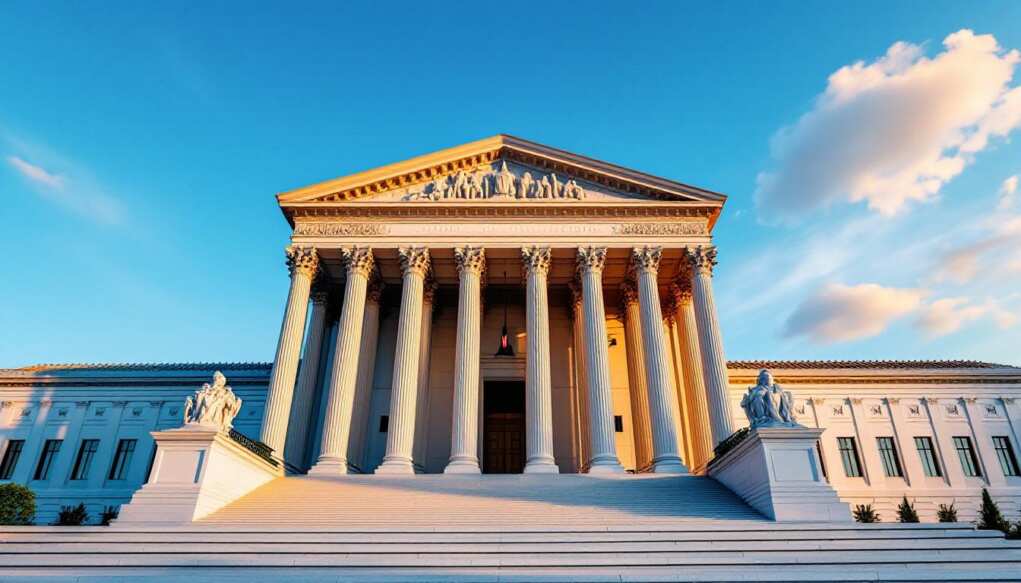
The Supreme Court just handed the environmental litigation industry a loss so big you could see the shockwave from the courthouse steps. In a ruling that came down this week, SCOTUS reversed a lower court and sided with Chevron in a Louisiana environmental lawsuit that was designed to bleed American energy companies dry through activist judges.
Unbelievable. And by that we mean — finally. It’s about time.
Here’s what happened. A bunch of environmental groups and their army of lawyers had been using Louisiana courts to go after Chevron and other oil companies with lawsuits claiming the energy sector was responsible for — wait for it — coastal erosion. Not a specific spill. Not a documented violation. Coastal erosion. As in, the ocean did what the ocean does, and lawyers figured out they could sue somebody rich for it.
The lower court bought it. Because of course they did. Activist judges in certain jurisdictions have turned the American legal system into a slot machine for green groups. File a lawsuit blaming oil companies for the weather. Find a sympathetic judge. Cash the check. Rinse, repeat.
But the Supreme Court looked at this one and said: no. Reversed. Done. The Justices essentially told these environmental lawyers that you can’t just drag energy companies into court and blame them for geology. The Earth’s coastline has been shifting since before humans figured out fire. But sure, it’s Chevron’s fault that Louisiana looks different than it did in 1950.
This is a massive win, and not just for Chevron. This ruling sends a signal to every activist law firm that’s been using the courts as a weapon against American energy production. The playbook was simple — file lawsuits in friendly jurisdictions, get rulings that cost companies billions, and use the threat of litigation to force settlements and policy changes that you could never get through Congress. The Supreme Court just ripped a page out of that playbook and set it on fire.
Think about what these groups were really after. They weren’t trying to clean up a beach. They weren’t trying to protect a wetland. They were trying to make it so expensive to produce oil and gas in America that companies would give up and move overseas. That’s the endgame. Not environmental protection — economic sabotage dressed up in a lab coat.
And who pays when energy companies get hit with billions in lawsuit costs? We do. At the pump. On our electric bills. In the price of everything that gets shipped by truck, train, or plane. Every one of these frivolous lawsuits is a hidden tax on working Americans, collected by lawyers in Italian suits who drive Teslas and live in coastal mansions that are — hilariously — also subject to coastal erosion. (But we don’t see them suing themselves.)
The environmental litigation machine has been one of the Left’s most effective weapons for decades. They can’t ban oil through legislation because voters would throw them out. They can’t regulate it away because the courts keep striking down their executive overreach. So they sue. Over and over and over. Death by a thousand paper cuts, funded by billionaire donors who fly private jets to climate conferences.
Not today. The Supreme Court just reminded everyone that the judiciary exists to interpret law, not to serve as the enforcement arm of the Sierra Club.
Now here’s the part that should make every American smile. When energy companies aren’t spending billions defending themselves from junk lawsuits, they can spend that money on things like — oh, I don’t know — drilling more oil, building more refineries, and bringing down the cost of gasoline. Funny how that works. Remove the lawyers and suddenly the market can actually function.
Will gas prices drop tomorrow because of this ruling? Probably not. But every time the courts push back against the green litigation machine, it gets a little easier for American energy companies to do what they do best — produce cheap, abundant energy that powers the greatest economy on Earth.
The environmental lawyers will regroup. They always do. They’ll find a new angle, a new jurisdiction, a new theory about how your SUV caused a hurricane in 2019. But today, the Supreme Court reminded them that there’s a limit. And that limit just got enforced.
Chevron wins. American energy wins. And somewhere, a very expensive environmental lawyer is updating his resume. What a time to be alive.