
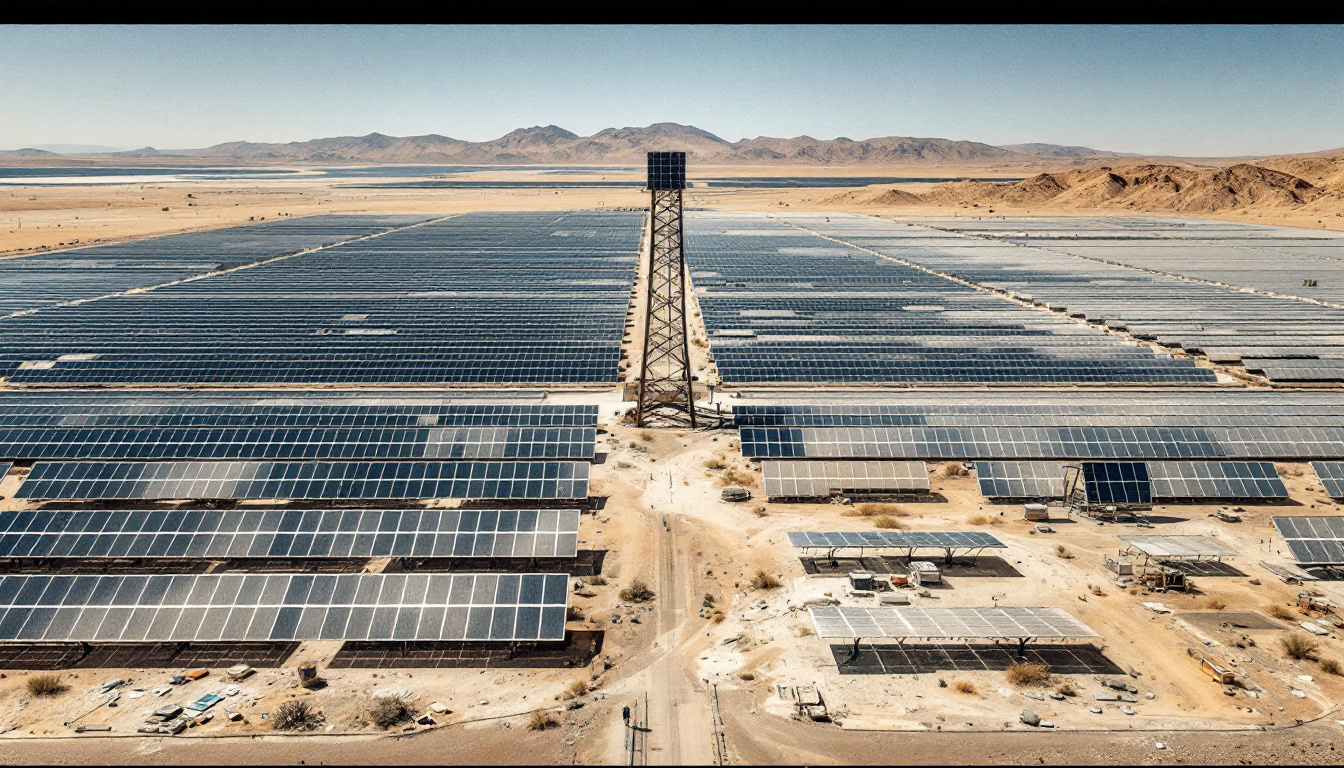
A billion dollars in federal backing. Ten thousand mirrors arranged around a tower in the Nevada desert. The Crescent Dunes Solar Energy Project was supposed to be the future of American energy — a "clean energy marvel" that proved solar could power the grid at scale.
It sold in July for $7 million.
That's the final price tag on a project that swallowed $737 million in federal loan guarantees and another $275 million in Treasury grant awards under the Obama administration. As RedState's Ward Clark reports, the total taxpayer exposure now sits at $507 million — roughly what the government lost on Solyndra, except this one managed to fail twice.
Crescent Dunes first went belly-up after the facility couldn't deliver on its energy promises. The technology — concentrating sunlight onto a central tower using those 10,000 mirrors to generate steam power — sounded impressive in grant applications. In practice, the Nevada desert proved that the sun doesn't cooperate on a schedule. The plant underperformed, the finances collapsed, and the whole operation landed in bankruptcy court.
Then someone decided it deserved a second chance.
The project was restructured, refinanced, and relaunched with the same fundamental problem: the economics of this particular solar technology didn't work. By January 2026, Crescent Dunes was back in bankruptcy court for round two. Sons of Liberty Construction, a Mississippi-based company owned by three brothers, picked up the remains in July for that $7 million figure — less than one percent of what the federal government originally poured in.
The Obama administration sold Crescent Dunes as part of a $90 billion clean energy stimulus package that was supposed to jumpstart the green economy after the 2008 financial crisis. Solyndra became the poster child for that era's failures. Ivanpah Solar, a similarly ambitious project in California, ran into its own problems. But Crescent Dunes holds a distinction neither of those can claim: it went through the entire cycle of government-backed failure, got a do-over, and failed the exact same way.
The pattern here isn't complicated. The government identifies a technology it wants to exist. It writes checks large enough to make the project look viable. The project launches, underperforms, and collapses. The private investors cut their losses. The taxpayers can't.
What nobody in the Obama administration's energy office had to answer for — not in 2015 when the plant underperformed, not in 2020 when it first went bankrupt, not in 2026 when it went bankrupt again — is why a project that couldn't survive its first contact with reality was worth a billion-dollar bet with someone else's money.
Seven million dollars. That's what the free market decided a billion dollars of government investment was actually worth.