
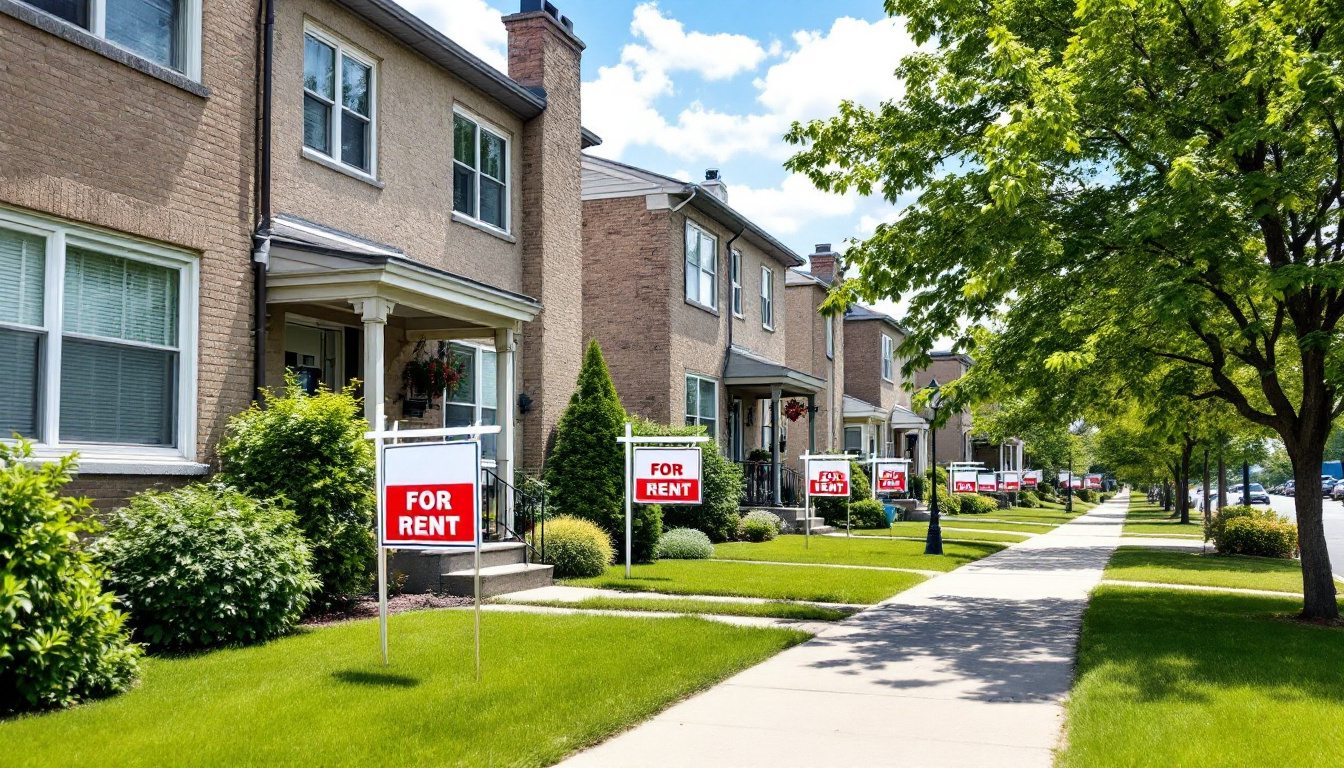
New Orleans rents dropped 8 percent. Nashville fell 5.3 percent. San Antonio, 4.8. Phoenix, 4.2. On Thursday, the Department of Homeland Security posted a single graphic to X that connected all of them to the same cause: cities leading in deportations are seeing the steepest rent declines in the country.
The caption was one sentence: "DHS is reducing your rent, especially in states that cooperate with @ICEgov."
The DHS data lays it out city by city. Austin, Texas saw rents fall 4.3 percent. Dallas and Houston both dropped roughly 3 percent. Atlanta came in at 3.2 percent. Miami — ground zero for the Florida immigration enforcement model — posted a 2.6 percent decline. Texas alone accounted for approximately 25 percent of all ICE arrests in July, and four of the nine cities on the list sit inside its borders.
This is what enforcement looks like when you measure it in something other than press conferences. Over one million people have been deported since President Trump returned to Washington, and the downstream effects are showing up where Americans actually feel it: monthly rent checks.
The housing math was never complicated. When millions of people who aren't supposed to be in the country compete for the same apartments, rent goes up. When enforcement removes them from the market, rent goes down. Exposed to political sunlight, the equation works exactly as every economist outside a faculty lounge would predict.
But the ripple effects go deeper than housing. Reports show that illegal aliens are increasingly pulling out of the U.S. banking system. Consumer loans to illegal aliens fell 70 percent since 2024, with an additional 40 percent decline in 2026. Auto loans and credit card lending to this population cratered from $37 billion in 2024 to a projected $7.2 billion this year. "The timing suggests lenders may be reducing exposure to these borrowers amid changes to the political and policy environment," Verkhoglyad said.
Immigration lawyer Jennifer Oltarsh put it more bluntly: "My clients are afraid, so they're pulling their money out of banks. They're holding it in their mattresses."
That's not a humanitarian crisis. That's the sound of a policy working. People who entered illegally, opened bank accounts illegally, and competed for housing illegally are now reversing the process — voluntarily. The self-deportation model that every Beltway expert called a fantasy is playing out in bank withdrawal slips and lease non-renewals across the country.
Erica Serna, associate director of financial empowerment at UnidosUS, confirmed the trend from the advocacy side: "We've seen a reduction overall in people who come for financial services, education services, workforce development." She called the atmosphere "truly frightening for families." What she described as frightening, renters in Nashville paying 5.3 percent less this month might describe differently.
Trump's May executive order directing federal authorities to monitor the residency status of financial clients accelerated the shift. The Treasury Department's Financial Crimes Enforcement Network — FinCEN — is now part of the enforcement architecture. Banks that once looked the other way are adjusting their exposure. The Independent Community Bankers of America has already called on regulators to "avoid information collection requirements that impose substantial burdens on community banks" — a polite way of saying the compliance costs of serving illegal customers are starting to outweigh the deposits.
The standard objection writes itself: these are families, they need shelter, the rent declines will hurt landlords. Landlords in New Orleans watched rents inflate for years while illegal immigration drove demand past supply. The correction isn't punishment. It's the market doing what markets do when artificial demand exits the system.
For a decade, Americans in these cities were told that mass immigration had nothing to do with their rising cost of living. The experts had models. The models said housing costs were driven by zoning and interest rates and construction labor shortages — which, coincidentally, were also driven by immigration, but that part got left out of the briefing.
Now DHS has its own model. It fits on a single graphic. Nine cities, nine percentages, one policy.