
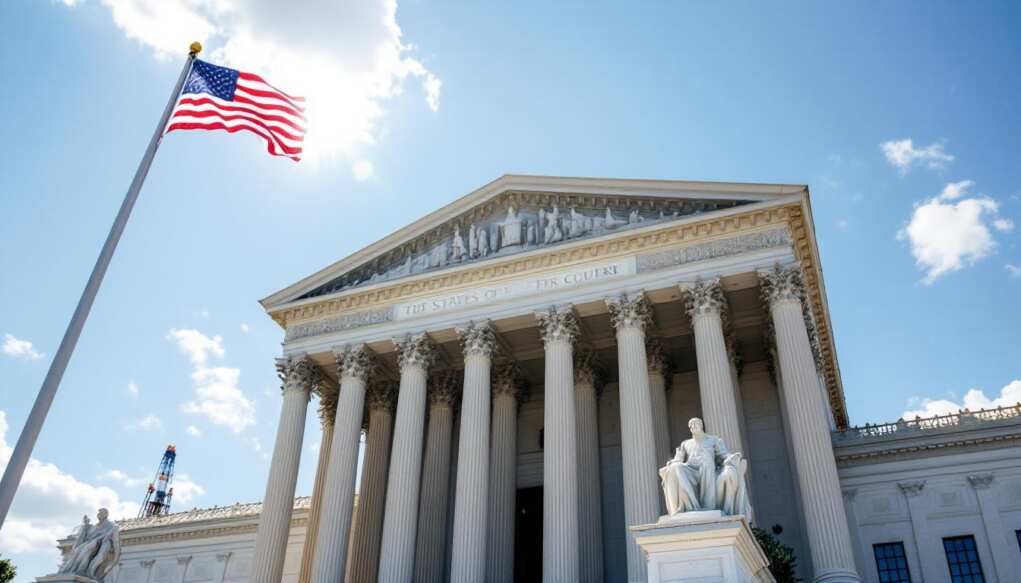
The Supreme Court just handed Chevron and the oil industry a clean, decisive win — reversing a lower court ruling that would have let Louisiana’s environmental lawsuit industry bleed energy companies dry through activist litigation. The message from the highest court in the land is simple: you cannot sue fossil fuels out of existence. You cannot litigate your way to a green utopia. And you cannot use courtrooms as a substitute for the legislation you can’t pass because voters don’t want it.
Somewhere in a law office decorated with “Save the Planet” posters and empty fair-trade coffee cups, an environmental attorney just threw his laptop across the room. Good. That laptop was probably charged with fossil fuel energy anyway.
Here’s what happened. Louisiana — or more accurately, the lawsuit-industrial complex operating within Louisiana — tried to hold Chevron and other oil companies liable for environmental damage through a legal theory so creative it belongs in a fiction workshop. The lower courts played along, because lower courts in certain jurisdictions have become rubber stamps for progressive policy goals that can’t survive a democratic vote. But the Supreme Court looked at the case, looked at the law, and said what needed to be said: no.
This is a massive deal, and not just for Chevron. Across the country, there are dozens of similar cases pending — cities, states, and activist organizations trying to use the courts to accomplish what they cannot accomplish through Congress. They want to make fossil fuel production so expensive, so legally dangerous, that companies simply give up and stop drilling. They can’t pass a law banning oil because Americans like driving cars and heating their homes. So they sue instead.
The strategy is elegant in its cynicism. You don’t need to win the argument in the public square. You don’t need to convince voters. You just need a sympathetic judge and a creative legal theory. File enough lawsuits, force enough legal costs, generate enough uncertainty, and eventually the industry folds. It’s death by a thousand paper cuts disguised as environmental justice.
The Supreme Court just took the scissors away.
What makes this ruling so satisfying is how cleanly it exposes the environmental litigation movement for what it actually is — not a pursuit of justice, but a political strategy wearing a legal costume. These groups don’t care about Louisiana’s coastline. They care about creating precedent that lets them sue every energy company in every jurisdiction until the entire fossil fuel industry is buried under legal fees.
Think about what they’re actually arguing. That companies who legally produced legal products, sold them to willing consumers, and followed every regulation on the books should be financially liable for… the climate. The entire climate. As though ExxonMobil personally caused Hurricane Katrina and Chevron is responsible for sea level rise in Bangladesh.
It’s insane. It was always insane. And now the Supreme Court has confirmed that it’s legally insane too.
The implications ripple out immediately. Every pending case built on similar legal theories just got significantly weaker. Every progressive city attorney who filed a climate lawsuit hoping to score a political win and a fat settlement just watched their case get a lot harder to prosecute. Every activist group that fundraised off the promise of “making Big Oil pay” just had to update their pitch deck.
This is what happens when you have a Supreme Court that actually reads the law instead of reading the New York Times editorial page. The Constitution doesn’t contain a secret provision that lets you sue companies for selling products that society demanded, consumed, and benefited from for a century. Sorry. It’s not in there. The justices checked.
And let’s talk about what this means for actual Americans — not environmental lawyers, not activist nonprofits, not the people who fly private jets to climate conferences. Regular people. People who fill up their trucks. People who heat their homes with natural gas. People whose jobs depend on an energy industry that employs millions and powers the entire economy.
Every one of these lawsuits is ultimately an attack on affordable energy. Every dollar a company spends defending itself in court gets passed on to consumers. Every legal risk priced into production makes your gas more expensive. The environmental litigation machine isn’t hurting Chevron executives. It’s hurting you. Your commute. Your electric bill. Your grocery prices that depend on diesel trucks delivering food to stores.
The Supreme Court just protected all of that. Not because they love oil companies. Because the law is the law, and you don’t get to rewrite it from a courtroom because Congress won’t give you what you want.
We win this one. Cleanly. Decisively. And every green activist lawyer in the country knows it.
Now if you’ll excuse me, I’m going to go fill up my truck without guilt. Again.