
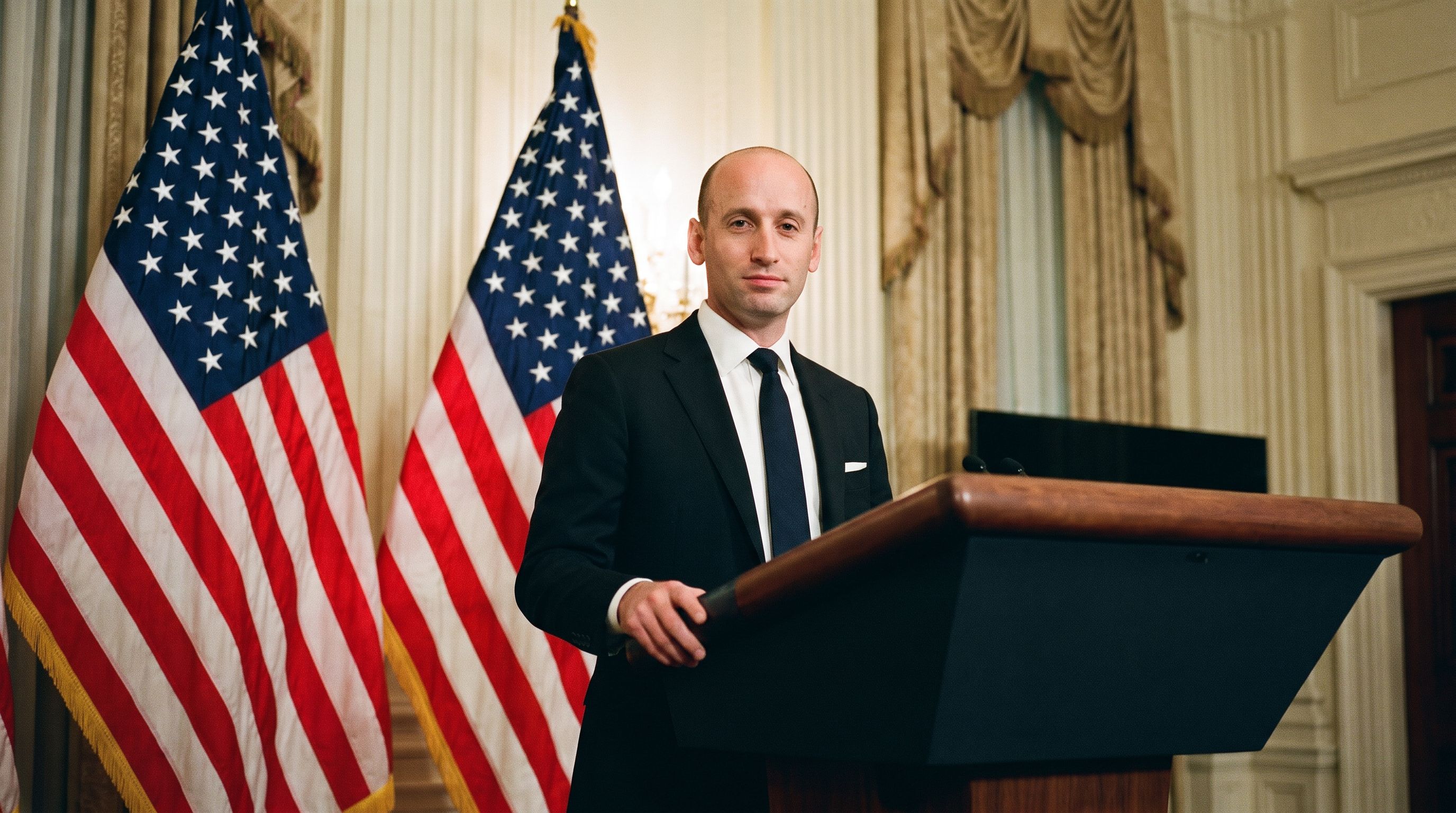
Stephen Miller took over as White House Chief of Staff on Monday and immediately circulated an internal memo that restructured how Trump's Cabinet operates — eliminating the old "Cabinet Secretary" position entirely, renaming it "Director of Cabinet Relations," and routing the policy process through the Deputy Chief of Staff for Policy and the National Security Advisor. Fox News Digital obtained the memo.
Translation: the people we elected Trump to put in charge of federal agencies just got told to actually run them.
For nearly two years under former Chief of Staff Susie Wiles, the Trump administration operated under what one former Trump administration official described to Fox News as "absolute control." Not control by the President. Control by Wiles. "She wants complete authority," the official said. "I can't control him. I can control everything else."
That's a remarkable thing for a chief of staff to communicate about the President of the United States — that the man the country voted for is the one variable she couldn't manage, so she managed everything around him instead. The official described a system where compliance wasn't optional: "The control doesn't come from, 'hey, you have to do this.' The control comes from threat of duress. Like, 'if you don't do this, I'm going to destroy you in the media.'"
Miller's memo dismantles that architecture. A source familiar with the document told Fox News it "will streamline the Cabinet, making it a more effective instrument for the President, whereas previously it was too constrained." A second administration source described the shift as "unleashing the Cabinet to be the captains of their own ship." Presidential scheduling now reports to Deputy Director of Outer Oval Operations Chamberlain Harris. Caleb Orr, formerly the Assistant Secretary of State for Economic and Business Affairs, steps in as Chief of Staff for Policy.
The structural message is straightforward. Under Wiles, Cabinet secretaries had to route decisions through a bottleneck designed to keep everything buttoned up. Under Miller, the bottleneck is gone. Agency heads report through a clear policy chain and are expected to execute the agenda without waiting for permission from the West Wing on every move.
"It's more a recognition that you can't possibly effectively micromanage this wide of an organization," the second source said. Which raises the obvious question: if everyone inside the building knew micromanagement was slowing things down, why did it take a staff change to fix it?
The answer is that Wiles' system wasn't designed for speed. It was designed for control. Every decision flowing through one office meant one office could slow anything down, redirect anything, or quietly kill anything that didn't fit the chief of staff's read on what was safe. That works if the goal is to avoid headlines. It doesn't work if the goal is to implement the platform 74 million people voted for.
Miller's restructuring is the organizational equivalent of what Trump voters have been asking for since Inauguration Day: stop playing defense and start governing like you won. The Cabinet secretaries are there because Trump picked them. The agencies exist to execute policy. The memo formalizes what should have been obvious from the start — that a chief of staff's job is to clear the runway, not stand on it.
The memo landed on Monday. By Tuesday it was already being described inside the building as overdue.
Nearly two years. That's how long the Cabinet operated under a system one insider called "too constrained." Miller's memo is one page. The constraint was never structural. It was one person's preference.