
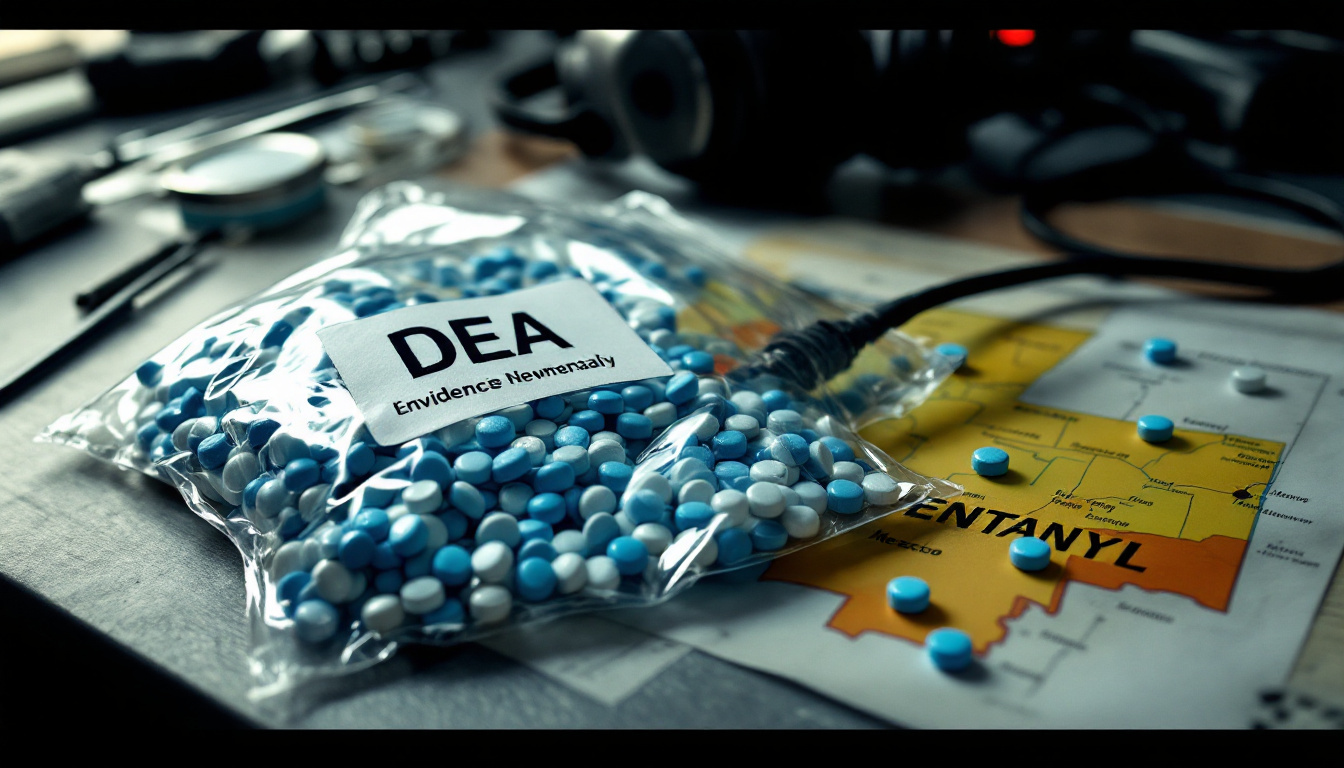
The Drug Enforcement Administration — the one federal agency whose entire job is keeping deadly drugs off our streets — deliberately allowed over 300,000 fentanyl pills to "walk" into communities across New Mexico between 2023 and 2025. Not because they lost track of them. Not because the cartels outsmarted them. Because they chose to let it happen.
According to a bombshell investigation by the Associated Press, DEA agents in Albuquerque repeatedly monitored fentanyl shipments through court-approved wiretaps and then just… watched. They tracked the pills. They knew where they were going. They let them land in the hands of dealers and, ultimately, users. The brilliant plan? Let the poison flow so they could maybe, possibly, build bigger cases against higher-level traffickers down the line.
The results speak for themselves. While fentanyl overdose deaths dropped 14.4% nationally between January 2025 and January 2026, according to CDC data, New Mexico saw a staggering 23% increase — the highest spike in the entire country. South Dakota came in second at 14%. New Mexico wasn't even close to the pack. It was in a league of its own, and now we know why.
DEA Special Agent David Howell, a 19-year veteran of the agency stationed in Albuquerque, saw what was happening and did what any decent human being would do — he blew the whistle. Howell filed a complaint alleging that the agency's "willful blindness" was getting people killed.
"Once fentanyl becomes available to the public, crime is fueled and overdoses and death become possible," Howell wrote in his complaint. Groundbreaking stuff, right? Apparently the DEA needed a reminder that letting fentanyl reach drug users is bad.
Howell didn't stop there. He told investigators that "the discretion provided is being severely misused" and that he became so disturbed by the tactic that he started personally flagging overdose deaths that might have been caused by the very pills his own agency let through. Let that sink in — a DEA agent tracking deaths caused by drugs the DEA chose not to seize.
And how did the agency reward his conscience? They benched him. According to the Albuquerque Journal, Howell says he was told the U.S. Attorney's office "will never prosecute any of my investigations again, even though I have not been accused of wrongdoing." Classic. Blow the whistle on the government poisoning communities, get frozen out.
The DOJ's Office of Professional Responsibility investigated the complaint in September 2024 and deemed Howell's allegations "unsubstantiated." Nothing to see here, folks. They did update their protocols, though — because apparently the existing rule that says "the benefits to be achieved through preserving the investigation must be assessed against potential public safety risks" wasn't clear enough for people with law degrees.
Former U.S. Attorney for New Mexico Alex Uballez, who left office in early 2025, defended the approach with the kind of honesty that accidentally makes the case against him. "In order to catch more than just the street courier, you have to watch crime happen to build the case," Uballez said. He also admitted: "Millions of fentanyl pills get onto our streets, period. That's just the truth of it."
Oh, wonderful. Thanks for the candor, counselor.
First Assistant U.S. Attorney Ryan Ellison, who took over in early 2025, issued a statement claiming his office "strictly scrutinizes all available information to prioritize removing fentanyl from our community." Sure. The 23% spike in deaths says otherwise.
Tristan Leavitt, president of Empower Oversight, the nonprofit helping Howell's whistleblower case, wrote a letter to the DOJ on June 2 calling Howell "a decorated DEA agent who faithfully and effectively helped protect Americans." Which is apparently a fireable offense at the DEA these days.
We spent years hearing that the border crisis was "managed," that the fentanyl epidemic was being "addressed," and that the grown-ups were in charge. Turns out the grown-ups were running surveillance on poison shipments and giving them a police escort to your neighborhood. The Drug Enforcement Administration chose not to enforce. Remember that the next time someone tells you the federal bureaucracy has your best interests at heart.