
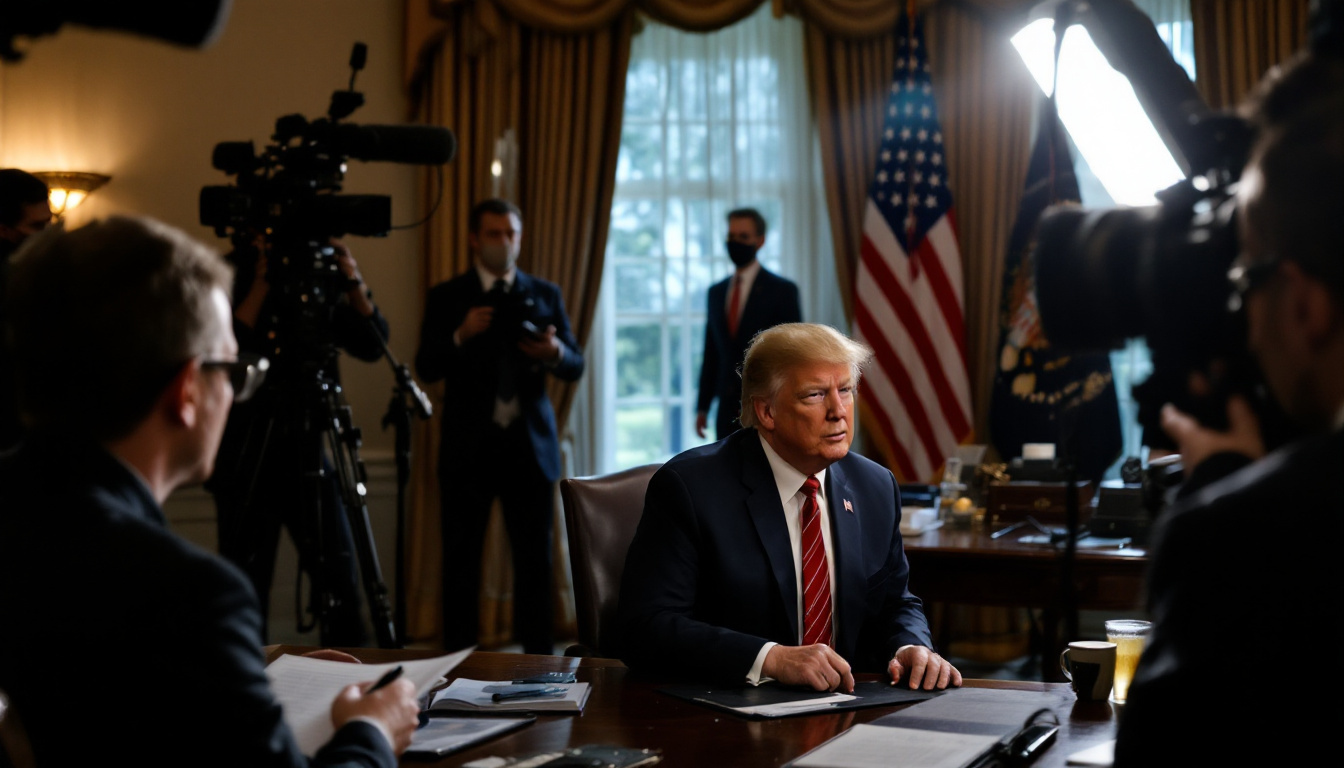
Ross Douthat sat down with President Trump at the White House on Friday — two days after the midterm results came in — and asked him straight: "Do you think you could work with Democrats without insulting them consistently?" Trump's answer was two words. "I could."
Anyone who's read The Art of the Deal knows what that sounds like. It sounds like the opening bid.
The 60 Minutes interview, which aired Sunday on CBS, showed a Trump that casual viewers might not recognize. He called his own deportation policy "too tough." He floated letting undocumented workers who've been in the country 10 to 15 years stay if they're employed. He said "I think it was bad messaging, maybe by me" when asked about the midterm results. Three-fourths of exit poll voters viewed the economy negatively. Two-thirds said Trump's tariff policies hurt the economy. The president read those numbers and did what he always does when the board shifts.
He repositioned.
The media is treating this like a personality transplant. It isn't. Trump acknowledged the deportation push led by Deputy Chief of Staff Stephen Miller may have overreached — specifically on workers like landscapers and hotel staff that American businesses depend on. That's not softness. That's a president identifying the piece of his agenda that cost him suburban votes and signaling he's willing to negotiate on it while keeping the rest of the enforcement architecture intact.
Douthat pressed him on whether he takes responsibility for the midterm losses. "I was not on the ballot," Trump said. Which is technically true and strategically important — he's separating his brand from the candidates who lost, the same way a CEO distances the parent company from a failed subsidiary. The losses belong to the campaigns that ran them. The course correction belongs to Trump.
The interview also revealed that Chief of Staff Susie Wiles resigned the Friday before the sit-down. That's not a coincidence in timing. When the top staff shakeup happens the same week the president goes on national television talking about working with Democrats, you're watching the reset happen in real time. Secretary of Defense Pete Hegseth and Secretary of State Marco Rubio were both mentioned in the broader conversation about 2028, with Trump notably refusing to commit to endorsing any Republican successor.
The Democrats who just won congressional majorities are already celebrating. They shouldn't get comfortable. A Trump who's willing to say "I was too tough" on camera is a Trump who's about to walk into a negotiation where the other side thinks they have leverage and discover they've already conceded the frame. Immigration reform with enforcement baked in. AI policy where the U.S. competes with China instead of regulating itself into second place. Infrastructure the Democrats want funded by the economic growth Republicans want.
Trump even acknowledged he hopes he's going to Heaven — "I don't wanna go to Hell!" — which is the kind of line that reminds you this is a guy who understands exactly what the camera is for.
Newsmax and CBS both covered the interview's conciliatory tone as the headline. The substance underneath tells a different story. A president with two years left, a Democratic Congress he needs to work with, and a negotiating style that starts with the handshake and ends with the signature.
The last time Trump sounded this reasonable on television, he got a Supreme Court justice confirmed, a tax bill passed, and a trade deal signed.
Three-fourths of voters said the economy was bad. Trump heard them.