
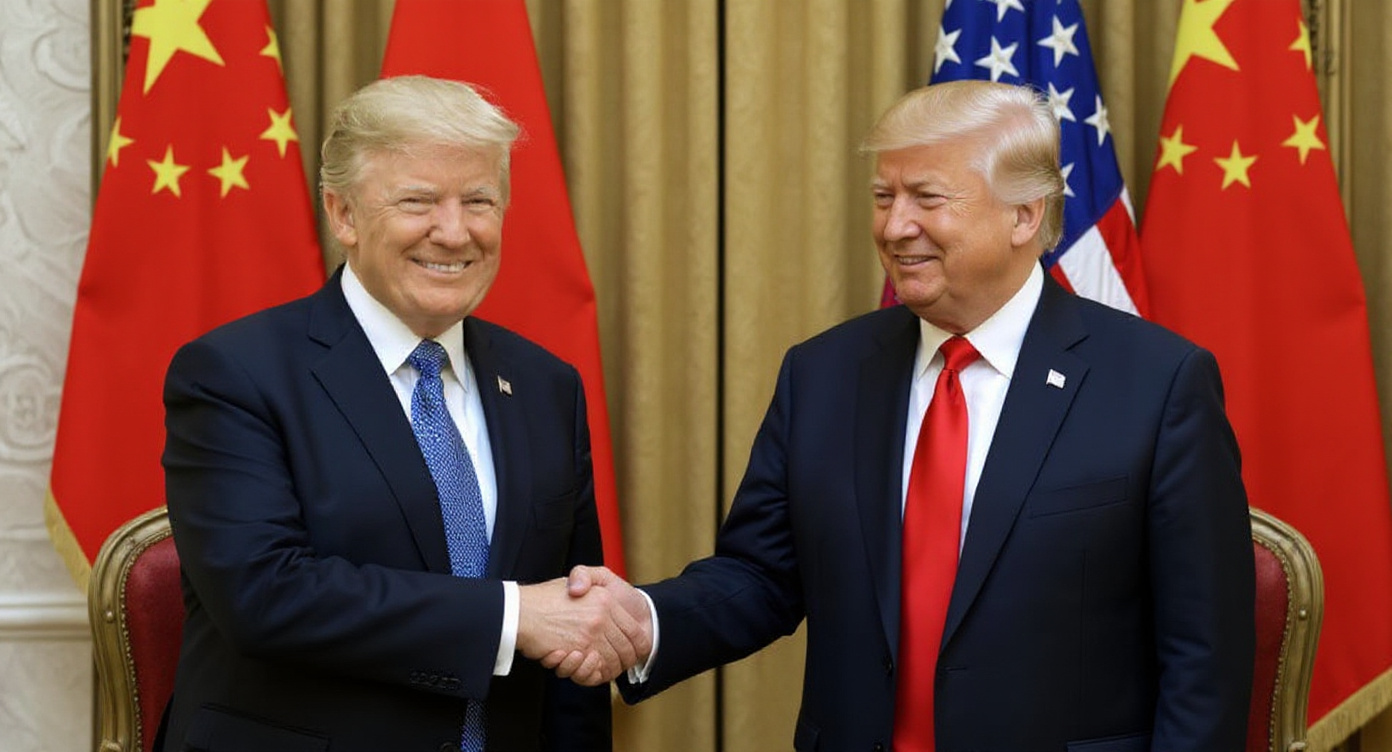
President Donald Trump wrapped up a two-day state visit to Beijing on Thursday and walked away with something no American president has managed since 2015 — a confirmed commitment from Chinese President Xi Jinping to set foot on U.S. soil. Xi accepted Trump's invitation to visit the White House on September 24, making it the first Chinese state visit to America in over a decade.
But sure, tell me again how "diplomacy" means sending John Kerry to beg for climate pledges nobody intends to keep.
The invitation came during a state banquet at the Great Hall of the People, where Trump looked Xi dead in the eye and said, "Thank you again, President Xi, for this beautiful welcome, and tonight, it is my honor to extend an invitation to you, Madam Peng, to visit us at the White House this Sept. 24, and we look forward to it." No ambiguity. No staff-negotiated maybe. A direct ask from one head of state to another, on camera, at the table.
Xi responded in kind, telling Trump that "the U.S.-China relationship is the most important bilateral relationship in the world. We must make it work and not mess it up." That's about as warm and fuzzy as Xi Jinping gets, folks.
Chinese Foreign Minister Wang Yi confirmed the visit late Friday, adding that "both sides should work together to make thorough preparations, create a favourable atmosphere, and achieve more substantive outcomes for the interactions and exchanges between the two heads of state." Translation from diplomat-speak: Xi is coming because Trump made it worth his while.
[AD BREAK]
This wasn't just a photo-op trip. Trump's bilateral meeting with Xi ran over two hours on Thursday, covering trade, the Iran war, the Strait of Hormuz — which carries 20% of the world's gas supply — and, naturally, Taiwan. Xi called Taiwan "the most important issue" and warned that "'Taiwan independence' and cross-Strait peace are as irreconcilable as fire and water." Trump, per the South China Morning Post, gave an "ambiguous answer" on a proposed $14 billion arms package to Taiwan, saying he "might or might not approve the sale." Classic Trump — keep them guessing.
The delegation Trump brought to Beijing read like a Fortune 500 board meeting: Elon Musk, Apple CEO Tim Cook, and NVIDIA CEO Jensen Huang were all in tow, along with Eric Trump and Lara Trump. About a dozen U.S. executives total. This wasn't a diplomatic courtesy call — it was a business summit dressed in black tie.
And the results show it. The two leaders agreed to a one-year trade truce, pulling back from the triple-digit tariffs that had been choking bilateral commerce and the Chinese export controls on rare earth minerals that were rattling American tech supply chains. They signed a joint vision statement committing to a "constructive China-US relationship of strategic stability" for the next three years. They also agreed the Strait of Hormuz must remain open — a statement that matters a lot more when there's an actual war in the Middle East.
Trump even floated attending the APEC summit in Shenzhen this November, telling reporters, "I'm gonna try to be there," and suggested Xi attend the G20 in Miami this December. If all three meetings happen — September in D.C., November in Shenzhen, December in Miami — it would be the most intensive stretch of U.S.-China summitry in modern history.
Now compare this to the last decade of China policy. Barack Obama hosted Xi for a state visit in September 2015. After that? Nothing. Biden got a handful of awkward sideline chats at international summits where Xi looked like he'd rather be literally anywhere else. No state visit. No serious trade framework. Just sternly worded press releases and TikTok hearings.
Trump hadn't set foot in China in nearly nine years before this week. He went anyway, brought his heavy hitters, made the ask, and got the yes. That's how you deal with a rival superpower — not by pretending they're your buddy at a climate conference, and not by being so terrified of confrontation that you never pick up the phone.
Xi Jinping is coming to the White House on September 24. Not because we begged. Not because the U.N. brokered it. Because an American president showed up in Beijing, conducted business like an adult, and extended an invitation that Xi couldn't refuse without losing face.
That's called leverage. Look it up, Democrats.
As reported by Newsmax, The Hill, and NPR.