
The average price of a new car in America hit $50,000 in July 2026, according to Kelley Blue Book. And until Friday, federal policy was still trying to make that number go higher — by requiring 67% of all new vehicles sold by 2032 to be electric.
That requirement is now dead.
President Trump announced the termination of Biden's EPA-imposed EV sales mandate, replacing it with new fuel economy standards drafted by Secretary of Transportation Sean Duffy and Secretary of Commerce Howard Lutnick. The old rule — Joe Biden's signature climate play — would have forced automakers to restructure entire production lines around electric vehicles most Americans weren't buying voluntarily.
Trump posted the announcement on Truth Social: "I have just approved new Fuel Economy Standards that TERMINATE Sleepy Joe Biden and Pete Boot-EDGE-EDGE's ridiculous EV Mandate." He followed up: "The Dumocrats cost our Great Auto Manufacturers $Billions, forced Americans into cars they never wanted, and wasted Billions on Chargers that were never built."
That last part is worth sitting with. The Biden administration didn't just mandate the cars — it spent billions on a national EV charging network that barely materialized. The mandate created demand by regulation. The infrastructure was supposed to follow. It didn't. Buyers got stuck with expensive vehicles and nowhere to plug them in outside a major metro area.
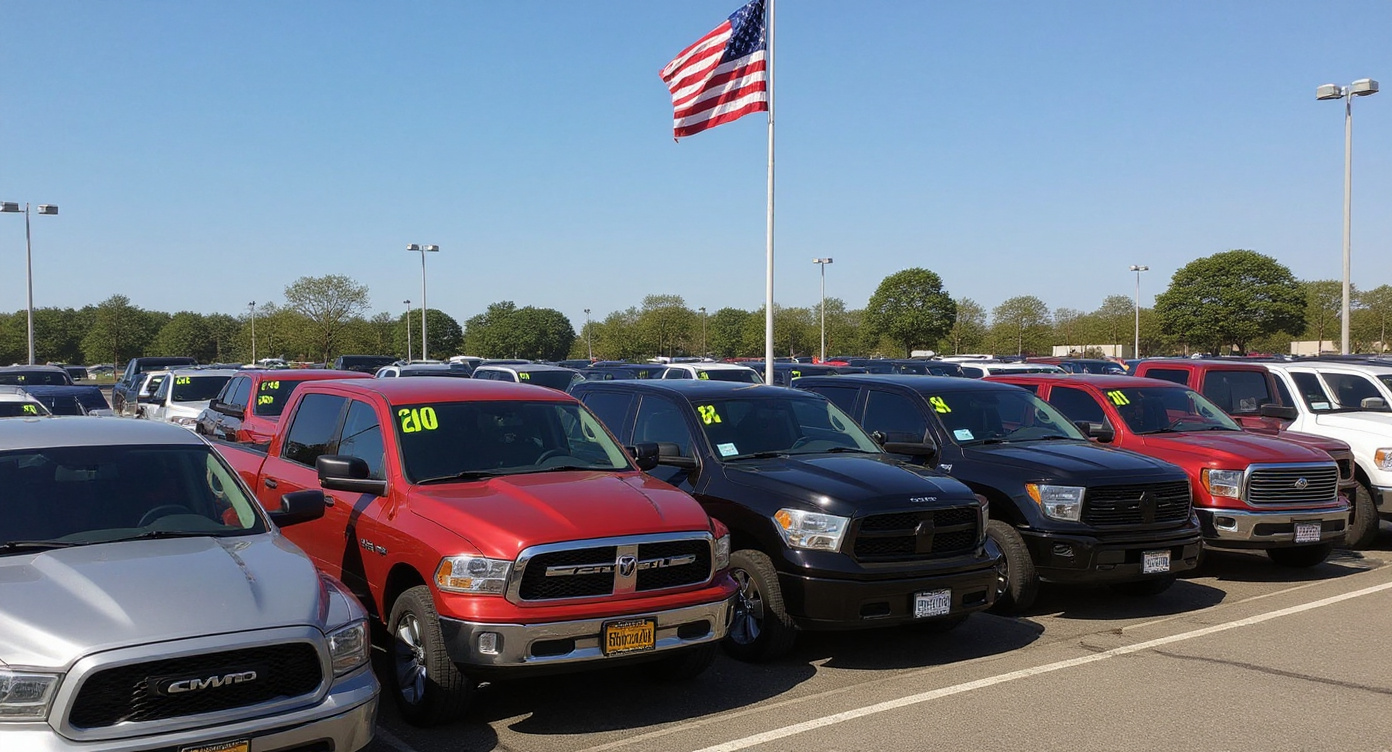
The market response to the rollback has already started. Stellantis announced $13 billion in new investment across Midwest factories in Indiana, Ohio, Michigan, and South Carolina — plants that build Jeep, Chrysler, and Ram vehicles. General Motors and Ford have signaled similar shifts back toward the trucks, SUVs, and gas-powered sedans that actually move off dealer lots.
Trump claimed over $100 billion in total auto investment under his administration. "These new Standards will take the waste out of building cars in America," he wrote. "That means LOWER PRICES, saving families thousands on a new, beautiful, and safe car."
The environmental lobby's objection is predictable: rolling back EV targets means more emissions. But the 67% mandate wasn't reducing emissions — it was reducing options. Automakers were canceling affordable gas models to hit compliance quotas, not because consumers wanted electrics. Ford lost $4.7 billion on its EV division in 2024 alone. The policy was subsidizing vehicles people didn't want with money taken from vehicles they did.
What made the Biden mandate particularly cynical was its timeline. A 67% electric sales requirement by 2032 assumed battery costs, charging infrastructure, and consumer demand would all break in the same direction over six years. None of those assumptions were tracking. The mandate wasn't a plan. It was a bet — placed with other people's money and other people's car payments.
Stellantis is reopening lines in Indiana. The average car price is $50,000. One of those facts is about to change the other.