
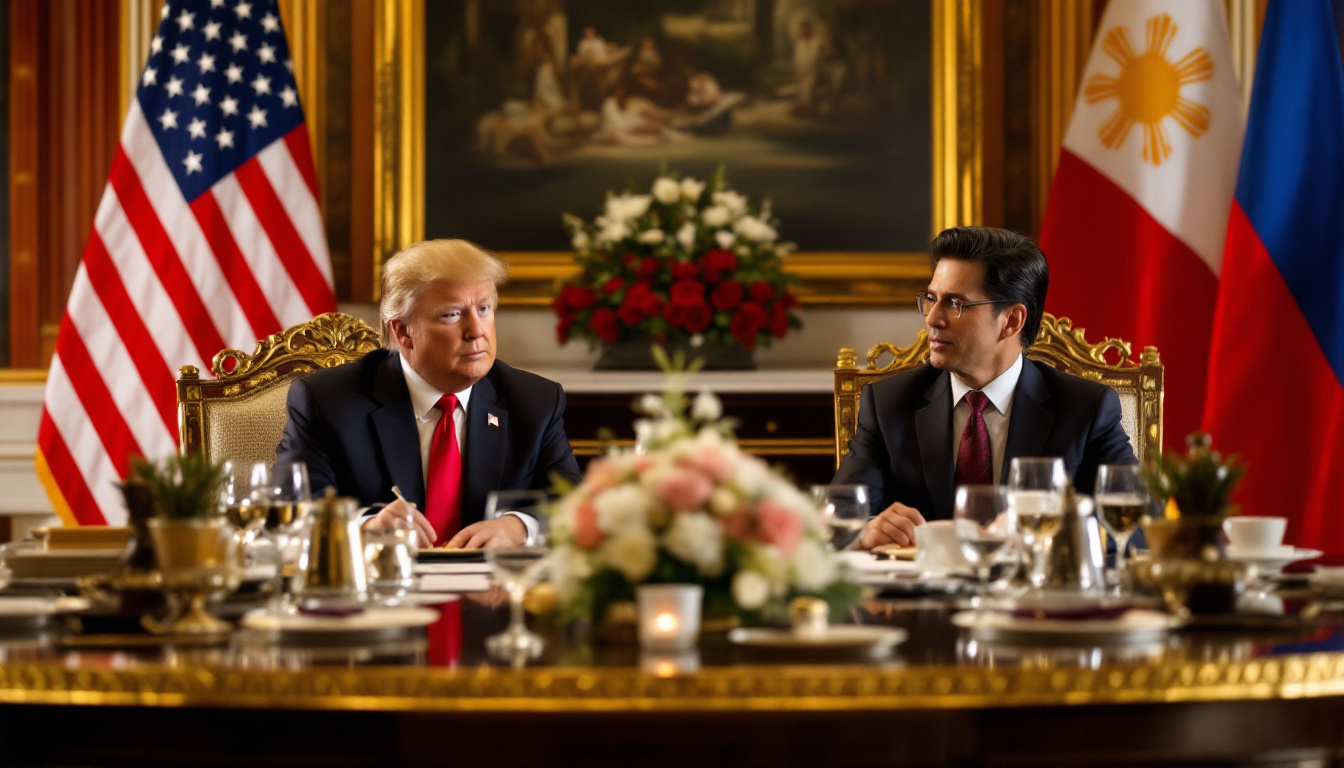
President Trump sat down for a state luncheon at Malacañang Palace on Wednesday with Philippine President Ferdinand Marcos Jr., and by the time the plates were cleared, he'd announced the completion of what he called the largest bilateral trade deal the United States has ever struck. No months of leaked drafts. No congressional preening. Just two leaders, a table, and a deal.
That's two countries in two days. Thailand was Monday.
"We've just consummated a very big trade deal, the biggest trade deal we've ever made by far," Trump told reporters at the palace, sitting alongside Marcos. He added that the agreement is "a fair deal for both countries" — the kind of line that drives the free-trade-at-any-cost crowd insane, because it implies the old deals weren't.
Trump followed up on Truth Social, posting that the Philippines deal "will be great for our Farmers and those in the business of 'Energy.'" The scare quotes around "Energy" were his — and knowing Trump, that's not punctuation, it's a preview. During the bilateral meeting earlier in the day, he told Marcos the two countries were "going to probably do something very big" on nuclear energy. That's not a throwaway line on a trip where the next stop is a trilateral nuclear summit.
Marcos, for his part, spoke of strengthening cooperation across trade, investment, energy, technology, supply chains, and education. The Philippine government characterized the agreement as an understanding on key areas of economic cooperation, particularly energy and food security. Secretary of State Marco Rubio was part of the American delegation at the table.
The media, predictably, spent the afternoon focused on what wasn't disclosed rather than what was accomplished. The specific terms haven't been published yet. Philippine Ambassador Jose Manuel Romualdez, asked whether anything was formally signed, texted reporters a single word: "None." That sent the usual outlets into their favorite mode — treating the absence of a signing ceremony as evidence that nothing happened, rather than recognizing that trade frameworks regularly get announced before the legal text is finalized.
We saw this exact routine with Thailand 24 hours earlier. Trump and Thai Prime Minister Anutin Charnvirakul signed a joint statement on the Agreement on Reciprocal Trade on Monday in Manila. The terms: Thailand eliminates all tariffs on American exports, dismantles non-tariff barriers across vehicles, medical devices, pharmaceuticals, ethanol, and poultry, and commits to purchasing an additional $2.6 billion in U.S. agricultural products. The "experts" spent Monday evening explaining why it wasn't really a deal. By Tuesday morning, the numbers were confirmed and the experts had moved on to the next thing they'd be wrong about.
The Philippines deal follows the same pattern. The announcement lands, the framework is set, and the legal finalization follows. That's how bilateral agreements work when one side isn't trying to run out the clock for four years.
What makes this trip different from the typical presidential Asia tour — the kind where you shake hands, eat dinner, and fly home with a communiqué nobody reads — is that Trump is stacking binding economic commitments back to back while simultaneously heading into a trilateral meeting with Chinese President Xi Jinping and Russian President Vladimir Putin in Shenzhen on Thursday. The APEC summit is the backdrop, but the real event is a three-way sit-down on nuclear arms control, the Iran war, and whatever else surfaces when the three most powerful men on the planet are in the same room. Senior administration officials have called it an "entry point" to reducing nuclear stockpiles.
So the scorecard reads: Thailand locked down Monday with $2.6 billion in ag purchases and full tariff elimination. Philippines locked down Wednesday with an energy and food security framework that Trump is calling the biggest deal yet. China is Thursday, with the highest-stakes diplomatic meeting of the decade on the schedule.
Three countries. Three days. Concrete outcomes at every stop.
Back in Washington, the Senate is debating whether to reject Trump's $1.5 trillion defense budget. The contrast writes itself — one branch of government is producing results across the Pacific, and the other is producing press releases about why they won't fund the military.
Trump told reporters in Manila that North Korean leader Kim Jong-un might also join the Shenzhen summit, saying it provided "a chance to accomplish a lot." He's not wrong. When you're already running the table, adding another chair isn't a risk.
It's Wednesday. He's not done yet.