
Fourteen applications to join the California Law Review's admissions committee, submitted between 2023 and 2026, contain written pledges to "uplift Native voices," weigh "diverse life experience" against "technical editing abilities," and "integrate anti-racist sentiment" into the selection process. Those aren't leaked talking points from some campus activist group. They're the stated criteria for selecting who gets onto UC Berkeley's flagship law journal.
Now the journal wants to delete every record that proves it.
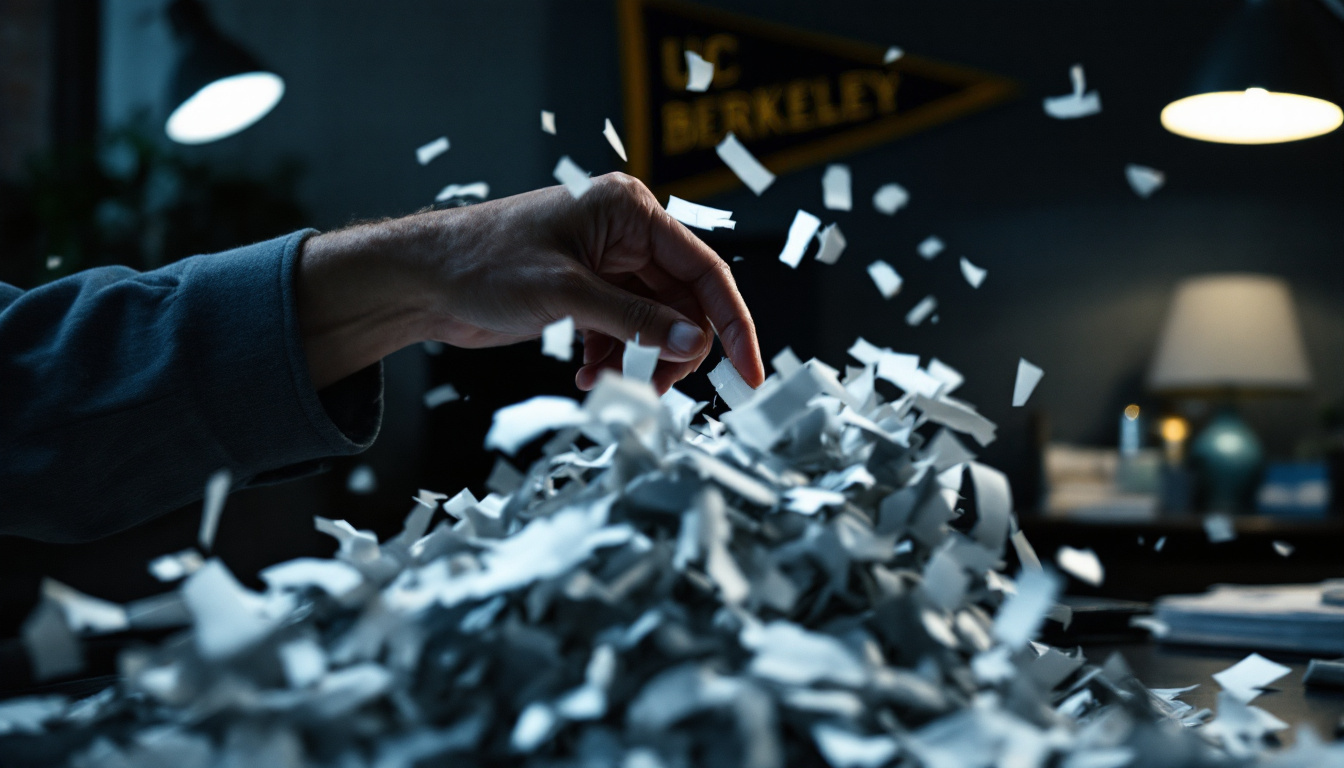
The California Law Review — the formal name for UC Berkeley's top law review — is set to vote on a document retention policy that would require the destruction of all Write-On application materials at the end of each year's selection cycle. The policy would also wipe out all materials related to the election of the journal's Holistic Review Committee, the eight-person body responsible for grading applicants' personal statements.
Those personal statements aren't a minor factor. They account for 30 percent of a candidate's total score. And unlike most top-tier law reviews, the California Law Review doesn't consider grades. The journal's own internal documents state that the holistic process "ensures that CLR upholds the values of diversity, equity and inclusion throughout our membership/scholarship." In practice, a 12-person admissions committee scores applicants on how well their life stories align with DEI priorities — and the personal statement is frequently the deciding factor.
The Supreme Court's 2023 ruling in Students for Fair Admissions v. Harvard was supposed to end this. Race-conscious selection — whether in university admissions or student-run organizations operating under a university's umbrella — became legally radioactive overnight. Every institution in the country got the memo.
Berkeley's law review apparently read the ruling and decided the problem wasn't the discrimination. The problem was the paper trail.
At least one editor on the journal has raised the alarm internally, arguing that destroying these records could constitute spoliation of evidence and expose individual students to criminal liability. That's a law student — at a law school — warning fellow law students that they might be committing a crime. The irony writes itself, except it's not funny. These are future attorneys learning, before they've even passed the bar exam, that the first move after getting caught is to shred the files.
The California Law Review isn't operating in a vacuum. The U.S. Department of Education opened an investigation into the Harvard Law Review in 2025 for alleged race-based discrimination in its own selection process. The Duke Law Journal was caught giving applicants extra points for minority status the same year. A pattern is emerging across elite legal academia: the institutions training tomorrow's lawyers are openly defying the highest court in the country, then scrambling to hide the proof when reporters come knocking.
Shirley Weber's office didn't write this retention policy. Gavin Newsom didn't sign off on it. This is a student-run journal making its own decision to destroy its own records — which means there's no bureaucratic layer to blame, no "miscommunication" to cite, no process failure to investigate. The people who chose to discriminate by race are the same people now choosing to eliminate the evidence of that discrimination.
The proposed policy hasn't been formally adopted yet. The vote is pending. Every member of the California Law Review who votes yes will be putting their name on a decision to destroy records that a federal investigation could subpoena tomorrow.
They're training to be officers of the court. The records still exist.