
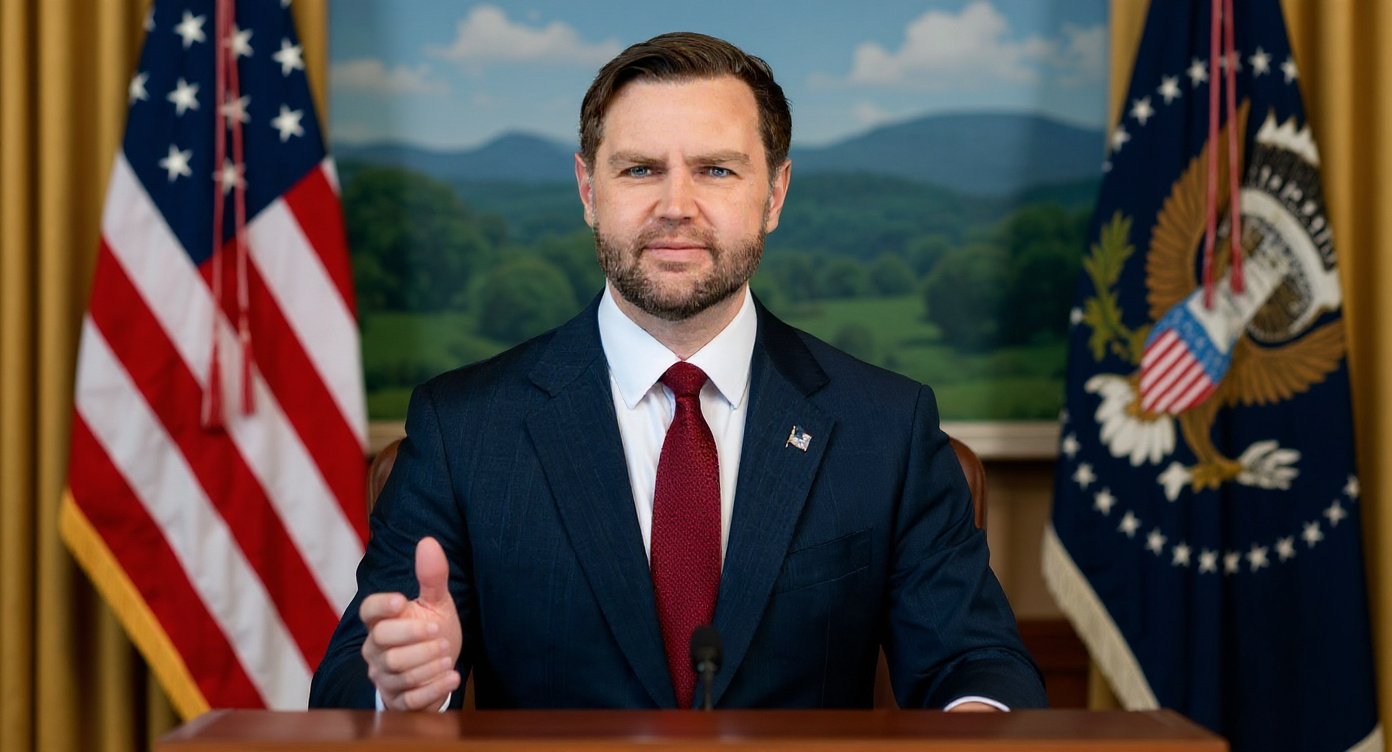
Fifty-six billion dollars. That's how much the federal government was hemorrhaging in fraudulent payments before anyone in charge decided to do something about it. Vice President JD Vance walked into a televised Cabinet meeting at Camp David late last week and laid the number on the table like a poker player flipping aces.
And that's just the money they've managed to stop so far.
Vance, who leads the Task Force to Eliminate Fraud under President Trump's direction, told the Cabinet that the task force has identified $230 billion in fraudulent government payments. "Just since the beginning of the Fraud Task Force that I started under [the President's] leadership and direction, we have identified $230 billion of fraud," Vance said. "We have halted, already, $56 billion of that."
Vance didn't stop at the big number. He announced 17 new anti-fraud actions during the meeting, totaling roughly a third of a billion dollars in additional savings. That's $333 million that sounds almost quaint next to the $56 billion headline, but in any other administration it would be the lead story for a week.
One example Vance singled out tells you everything about how deep the rot goes. He described a Medicaid program designed to ensure low-income mothers and babies have access to neonatal care — the kind of thing nobody opposes. Except the money wasn't going to mothers and babies. It was going to fraud. "That is a disgrace," Vance said. "And until the president ordered us to stop it, no one was doing anything about it."
Not the previous administration. Not the career bureaucrats running the program. Not the oversight committees that are supposed to catch this stuff. Nobody.
The usual objection from the left is that fraud crackdowns are really just cover for cutting programs that help people. Which is an interesting argument to make about a neonatal care program where the money wasn't reaching a single mother or baby. Stopping fraud in a program designed for low-income families isn't cutting the program — it's the first step toward the program actually working.
The Camp David meeting was the first Cabinet meeting to be televised, which means the administration wanted these numbers on the record and on camera. That's not the behavior of people guessing at the figures. You don't broadcast your fraud audit unless you're confident in what you found.
The broader pattern here matters more than any single number. For decades, federal fraud was treated like weather — everyone acknowledged it existed, nobody tried to stop it, and the people paying for it had no say in the matter. Two hundred and thirty billion dollars didn't disappear because of a few bad actors filling out fake forms. That kind of systemic failure requires systemic indifference.