
In June 2019, Volkswagen of America posted an essay on its own website. The title left no room for doubt: "What becoming 'carbon neutral' means to Volkswagen – and why it's the only way forward."
Its CEO at the time, Scott Keogh, explained why the company was pouring billions into electric cars. "It is critical for the planet," he said, "it is required of our industry and it is the right thing for our company."
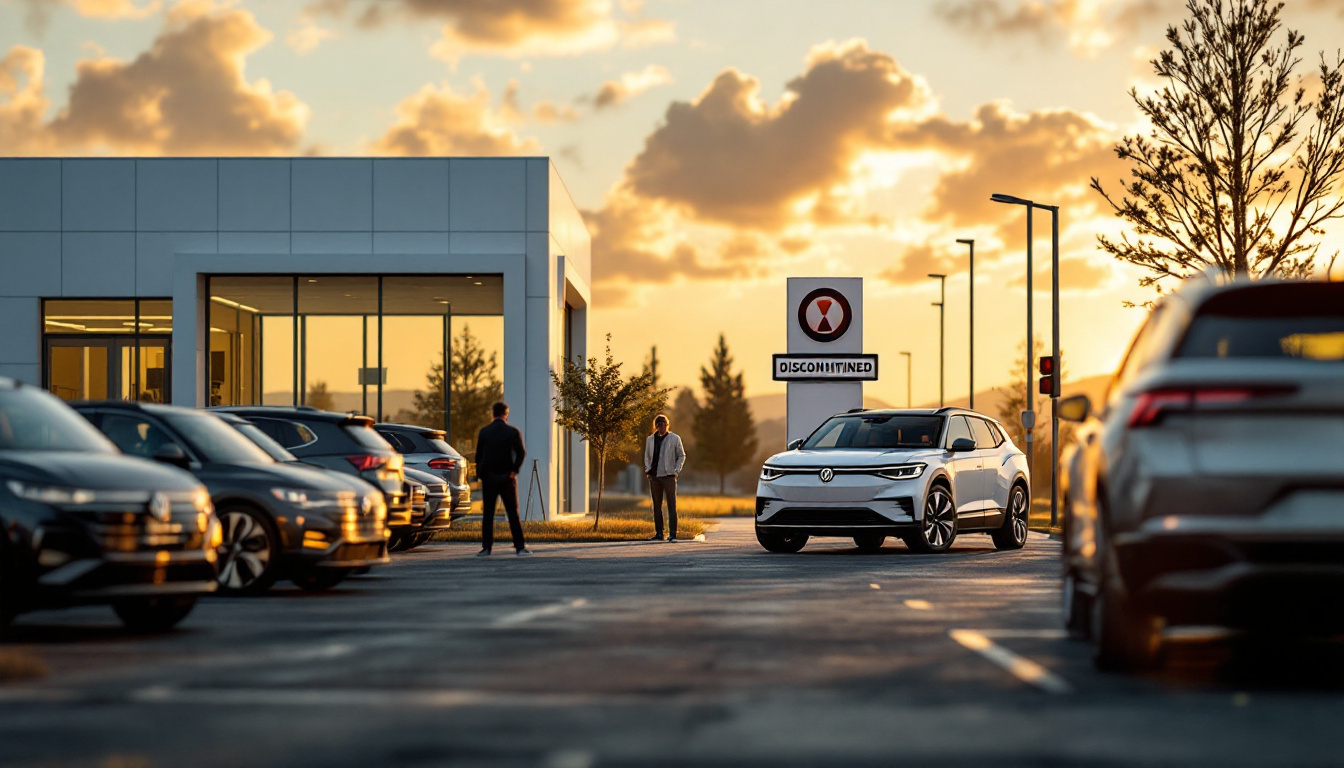
On April 9, 2026, Volkswagen announced it would stop building the ID.4, the only electric vehicle it made in America. Its plant in Chattanooga, Tennessee, would go to the gas-powered Atlas SUV.
The announcement read like a hostage note drafted by the marketing department. It blamed an EV market that "continues to challenge the industry, requiring measured decisions." It didn't use the words climate, emissions, carbon, or planet once.
Seven years earlier, the planet was "critical." This time it didn't get a single word.
Volkswagen's electric crusade in America began in a courtroom. In 2015, the company was caught putting "defeat devices" in about 11 million diesel cars worldwide. The software cheated emissions tests on cars VW had sold to Americans as "clean diesel."
Volkswagen pleaded guilty to three federal felonies, paid a $2.8 billion criminal fine, and agreed to more than $22 billion in North American settlements. One executive, Oliver Schmidt, got seven years in federal prison.
The company then turned its court-ordered penance into a moral mission.
In 2019, it announced an $800 million expansion in Chattanooga to build EVs. It pledged that its vehicles and factories would be carbon neutral by 2050. VW executives bragged buyers could knock $7,500 off the price with a federal tax credit, paid for by American taxpayers.
Republicans ended that credit on September 30, 2025. In the fourth quarter, Volkswagen sold just 248 ID.4s.
Before the credit went away, VW had sold 22,373 ID.4's. Not bad. But once the subsidy was gone, the buyers were gone too.
Meanwhile, the gas-powered Atlas has been Volkswagen's second-best-selling model in America for three straight years. Nobody needed a government check to buy one. Families wanted three rows of seats, room for the soccer team's gear, and a gas tank they can fill in five minutes.
The retreat from electric cars reaches all the way to Europe. In April 2025, Volkswagen CEO Oliver Blume questioned the European Union's 2035 ban on new gas and diesel cars. In December 2025, the EU proposed dropping its zero-emissions requirement, and Volkswagen called the move "pragmatic and in line with market conditions."
And Scott Keogh, the man who called electric cars "critical for the planet"? He now runs Scout Motors, Volkswagen's new American truck and SUV brand. Scout offers its vehicles fully electric or with a gas engine on board to keep the battery charged.
Scout has taken more than 150,000 reservations, and about 85% chose the gas engine.
Keogh had expected 60%.